Showing posts with label Scotland. Show all posts

Wednesday, 28 December 2022

Neo-Victorian Voices: Hester, Laurie Lico Albanese (2022)

Welcome back to the Neo-Victorian Voices series, where I review books written in the twenty-first century, but set in the nineteenth. Today it’s the turn of Laurie Lico Albanese’s 2022 novel, Hester, which was inspired by one of the great American nineteenth-century novels—Nathaniel Hawthorne’s The Scarlet Letter (1850).
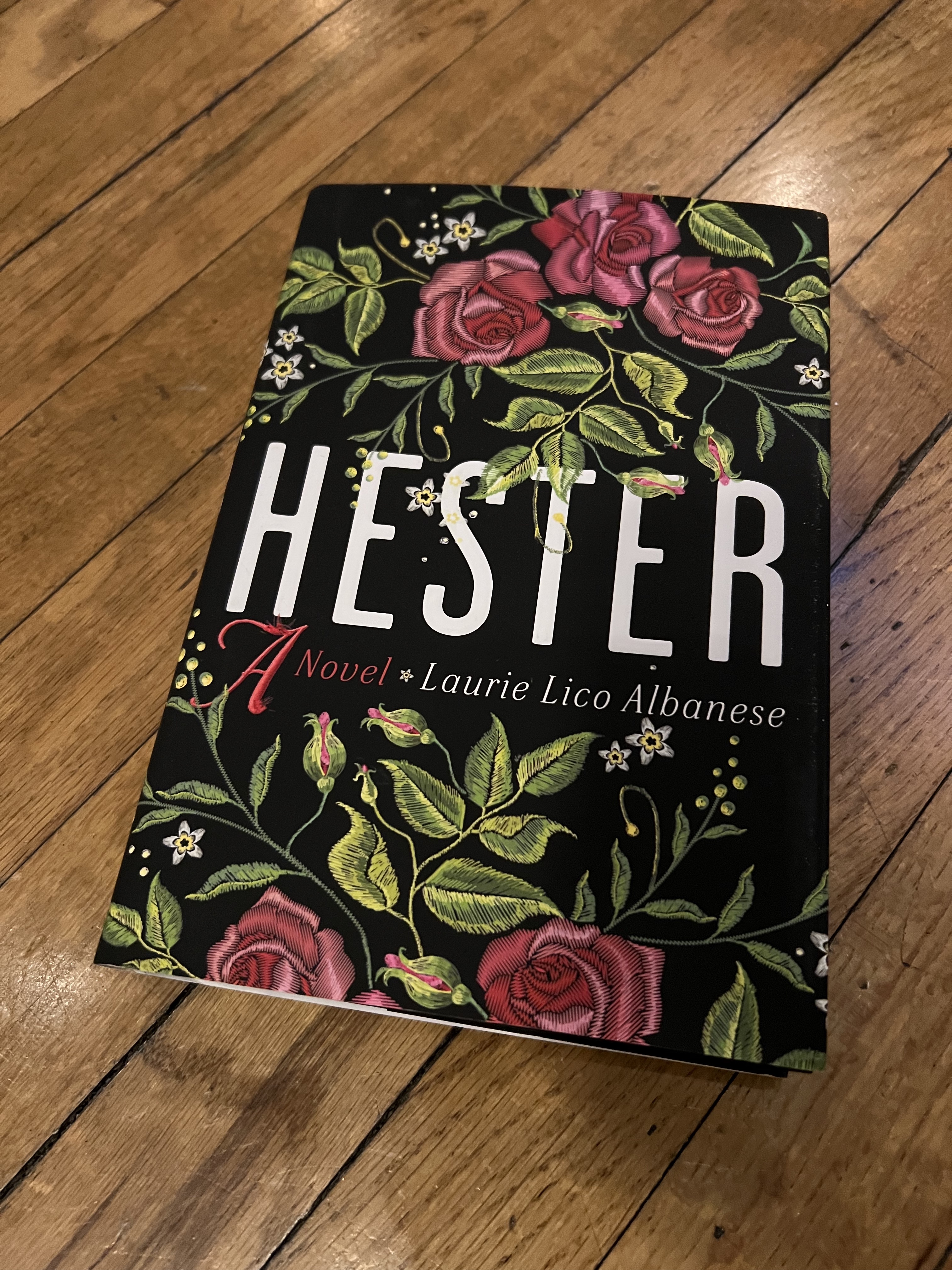
The title of the novel may be Hester, but our protagonist is the fictional Isobel, a young Scottish wife to an opium addict husband who immigrates to Salem, Massachusetts. There she encounters aspiring writer Nat Hathorne (who hasn’t yet altered the spelling of his name) and becomes a model for the character of Hester Prynne in his most famous novel.

Nat and Isobel’s emotional and romantic connection is at the core of the story, but the book isn’t just about Isobel as a muse—she is also an artist. A talented seamstress and embroider, just like Hester, Isobel has synesthesia. She sees letters in color, including, you guessed it, a scarlet “A,” but the condition isn’t one that’s talked about or understood. Isobel fears her ability may be magic passed down to her from an ancestor once accused of being a witch, a concern that dogs her when she learns the history of the 1692-1693 Salem witch trials, and the Hathorne family’s role in them. 

Familiarity with The Scarlet Letter is a plus, but not a prerequisite, for enjoying this historical novel, which errs on the side of realism over high drama. I most enjoyed the point of view of a character with synesthesia, the detailed descriptions of needlework, and the picture built up of nineteenth-century Salem. Short episodes detailing the exploits of Isobel's and Nat’s ancestors provided atmospheric background but didn’t add much to the overall plot. And the secrets harbored by Isobel’s Black neighbors were a little predictable, even though they were a welcome reminder of a broader historical context to the novel.

Overall, I’d recommend the book to lovers of nineteenth-century America settings and those who like their #histfic with just a hint of supernatural spice.

What novels would you like to see me review next as part of my Neo-Victorian Voices series? Let me know—here, on Facebook, on Instagram, or by tweeting @SVictorianist.

Sunday, 29 March 2015

Lucia Madness at the Metropolitan Opera, New York City

Last week, the Secret Victorianist, along with some student friends, attended MetStudents’ #LuciaMadness event before a production of Donizetti’s Lucia di Lammermoor at the Metropolitan Opera.

The Secret Victorianist at the Metropolitan Opera
Mary Zimmerman’s production has a mid-nineteenth-century setting, although Donizetti’s opera premiered in 1835, and Walter Scott’s The Bride of Lammermoor (the historical novel on which Salvadore Cammarano’s libretto was based) was published in 1819 and set in the seventeenth century.

Mara Blumenfeld’s sumptuous costumes are instrumental in suggesting this period in the production (with Daniel Ostling’s striking sets more focussed on creating a Romantic Scottish landscape), so it was apt for the drinks event to encourage young operagoers to don Victorian dress of their own. There was even the opportunity to pose in Lucia’s blood-drenched gloves and veil and brandish her knife (check out #LuciaMadness on Twitter for more photos).

The Secret Victorianist as Lucia Ashton
The emphasis on Lucia’s madness isn’t just a marketing ploy. The plot (familial feuds, love, betrayal) and the music move towards the climatic scene where Albina Shagimuratova’s blood-splattered bride loses her mind and hits the high notes in the beautiful aria ‘Il Dolce Suono’.

That Lucia’s madness is especially important to this production in particular is suggested from Act One, where Zimmerman chooses to stage the ghost during Lucia’s ‘Regnava Nel Silenzio’. Madness seems the natural result of a young girl living out her life on these misty moors, surrounded by ghosts, and torn between the passions of her brother and lover.

The Secret Victorianist brings nineteenth-century
dress to the streets of New York
Joseph Calleja sang Edgardo with strength and passion, producing a second climactic moment after Lucia’s mad scene, but the scenes between the siblings (Shagimuratova with Luca Salsi’s Enrico) perhaps showed more connection between the performers.

Other highlights included the injection of humour during the wedding scene. The cast pose for photographs as Lucia turns away from her groom and the camera, raising some titters from the audience just prior to the tragic and murderous turn of events.

Lucia di Lammermoor is an opera with a timeless plot of love and betrayal, but a nineteenth-century setting seemed an ideal one, given how Victorianism can at times be a sort of shorthand in popular culture for the repression of women in marriage and their resulting madness.

The production is running until April 10th so catch it if you can.

Do you know of any other nineteenth-century-based plays or productions the Secret Victorianist should attend in New York? Let me know – here, on Facebook or by tweeting @SVictorianist!