Showing posts with label Karen Joy Fowler. Show all posts

Saturday, 30 December 2023

2023: My Year in Reading—A Retrospect

As 2023 comes to a close, it’s time to review what I read in the last year. How did my habits change compared to 2022 and what themes emerged from the books that made it from my TBR and onto my nightstand? As usual, I tracked my progress via Goodreads and set myself a challenge on the platform, so to keep up with what I’m reading in 2024, make sure you connect with me there.
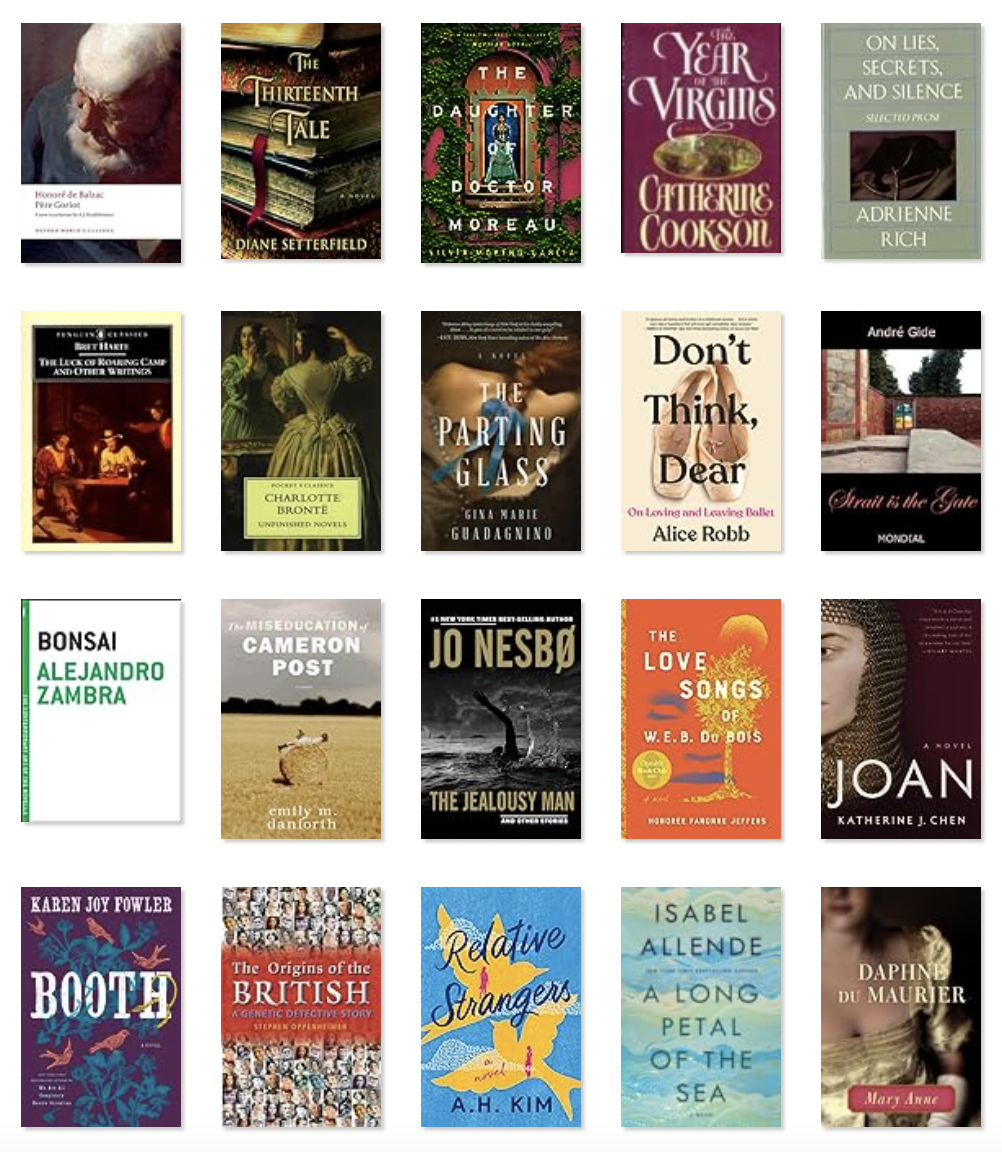
In 2023, I read 50 books (compared to 60 in both 2021 and 2022). At this slower pace, I had to average ~50 pages a day, which was still at times a tough ask, but achievable during what has been a hectic year.

I leaned towards selecting books by female writers—38 of the books I read this year were by women and 12 were by men.

Novels made up the bulk of my reading material—they accounted for 36 out of 50 reads. But I also read 10 works of non-fiction, three plays/collections of plays, and one collection of short stories.

As you might expect from a writer of historical fiction, the genre remains my favorite—19 of the books I read in 2023 fit into this category. But I also read 5 novels with strong fantasy/speculative elements and 4 that dealt with mystery and/or crime. 

Nine of the authors I read this year are known to me personally. Congratulations again to Hope C. Tarr, Nancy Bilyeau, and Nicole Evelina for the publication of their 2023 novels and to Richard Huddleson for his dramatic translation.

I reviewed five of the novels I read on this blog, so check out the full posts for my take on each of them. They were Karen Joy Fowler’s Booth (2022), Gina Marie Guadagnino’s The Parting Glass (2019), Silvia Moreno-Garcia’s The Daughter of Doctor Moreau (2022), Julie Gerstenblatt’s Daughters of Nantucket (2023), and Rachel Cantor’s Half-Life of a Stolen Sister (2023).

The top theme that emerged from my reading this year was romantic and/or intense relationships between women characters. Yiyun Li's The Book of Goose (2022), Julia Fine's Maddalena and the Dark (2023), Gina Marie Guadagnino's The Parting Glass (2019), and Emily M. Danforth's The Miseducation of Cameron Post (2012) all fit into this category.

I also read two Bronte-related books (Lucasta Miller’s The Bronte Myth (2001) and Rachel Cantor’s Half-Life of a Stolen Sister (2023)), and two ballet-related books (Adrienne Sharp’s White Swan, Black Swan: Stories (2002) and Alice Robb’s Don’t Think, Dear: One Loving and Leaving Ballet (2023)).

One thing I enjoyed this year was mixing up my reading by turning to books I wouldn’t necessarily have chosen by myself but ended up loving. A book club led to me reading Michelle Zauner’s Crying in H Mart (2021), while Ursula Parrott’s Ex-Wife (1929) was a gift that became one of my favorite reads of the year.

Going into 2024, I hope to continue to bring this same spirit of experimentation to my reading. I’m looking forward to seeing which 50 books I turn to next… 

What were your top reads of 2023? Let me know—here, on Instagram, on Facebook, or by tweeting @SVictorianist. Want to keep up with my reading and writing? Sign up for my email newsletter here.

Thursday, 30 November 2023

The Secret Victorianist’s 2023 Holiday Gift Guide

Merry Christmas/Happy Holidays to everyone celebrating this festive season and welcome (back?) to the Secret Victorianist—my blog dedicated to nineteenth-century literature and culture. In today’s post, I share some gift (or let’s face it, self-gifting) ideas for lovers of books and Victoriana. Let me know what you think and what else is top of your wish list…

For the busy bookworm… Consider giving them an annual subscription to Audible, so they can listen to books with their hands full or while on the go.

For the Victorianists who read the footnotes… The Longman Annotated Poets series is incredible. Why not pick up their Selected Edition of Tennyson’s poetry?

For historical fiction fans… Some of the best #HistFic books I read this year were Booth by Karen Joy Fowler, Joan by Katherine J. Chen, The Daughter of Dr. Moreau by Silvia Moreno-Garcia, A Witch in Time by Constance Sayers, and The Orchid Hour by Nancy Bilyeau.

For fans of the Victorian aesthetic… Buy them a locket or a cape or a fan or a corset or a parasol or a print of a Pre-Raphaelite painting or William Morris wallpaper. 

For those looking to time travel… Consider booking an experience (e.g., getting tickets to a ball, visiting a stately home, or having afternoon tea).

For letter writers… Beautiful, monogrammed stationery makes for a wonderful gift. Wax seal = optional. 

For Bronte fans… My fiction pick for the year is Rachel Cantor’s Half-Life of a Stolen Sister (check out my review here) or my own novel Bronte’s Mistress, of course, while I recommend Lucasta Miller’s The Bronte Myth to those who prefer non-fiction.

For historical novelists… Buy them a ticket to the Historical Novel Society Conference 2024, at Dartington Hall in the UK. We’re going to have a blast. 

Have more ideas to add to my list? Share them below, on Facebook, on Instagram, or by tweeting @SVictorianist. Want a signed copy of Hope C. Tarr’s Irish Eyes (2023), another great historical fiction read? Sign up to my monthly email newsletter by December 7th for a chance to win!

Saturday, 25 February 2023

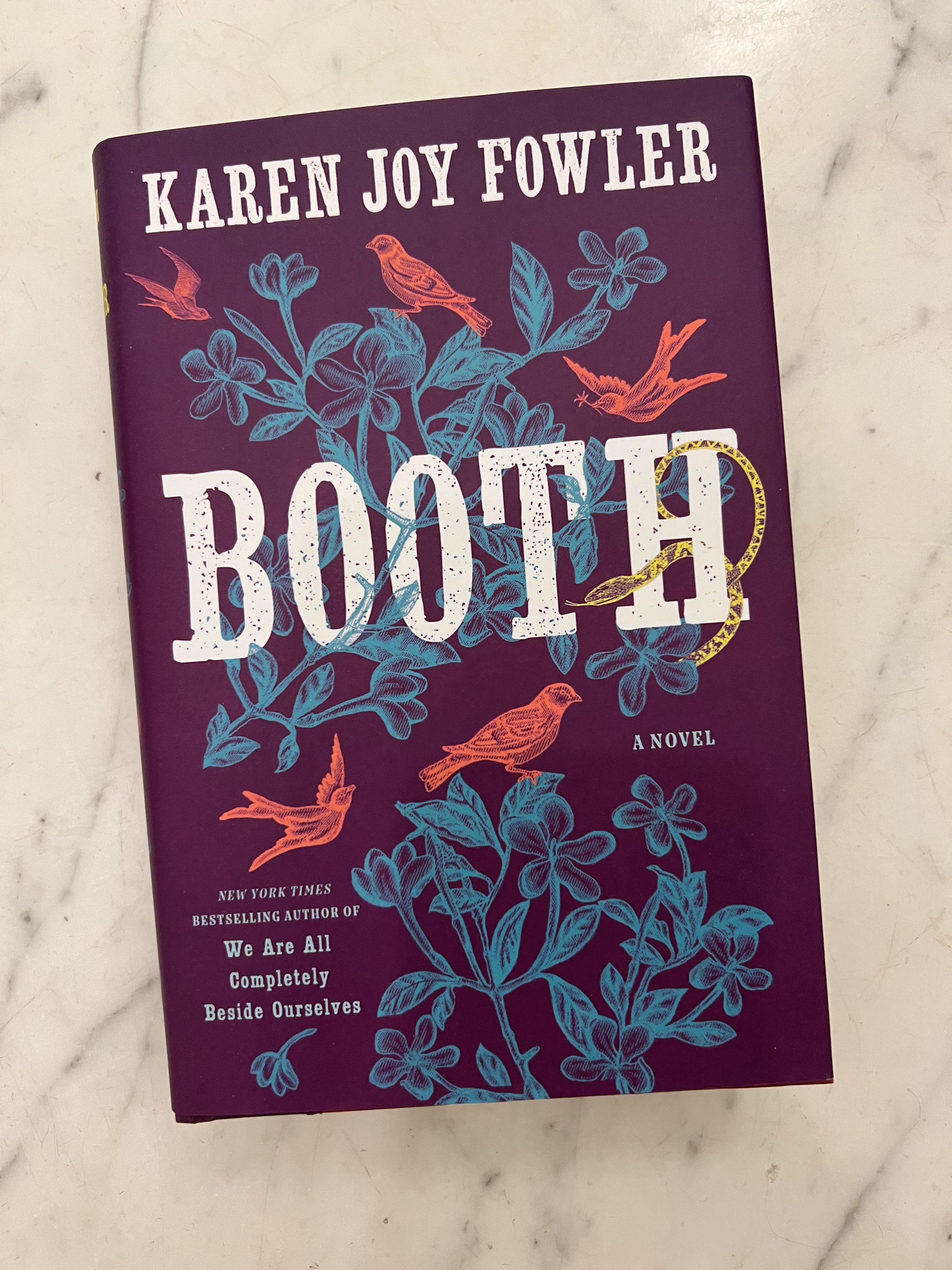
Neo-Victorian Voices: Booth, Karen Joy Fowler (2022)

I imagine that many American readers will come to Karen Joy Fowler’s 2022 novel, Booth, with preconceptions about John Wilkes Booth (1838-1865), the man who assassinated President Abraham Lincoln (1809-1865). However, having grown up outside the US, my knowledge of the killer and the theatrical family he was part of was essentially nonexistent before I sat down to read this latest book in my Neo-Victorian Voices series, about novels set in the nineteenth century but penned in the twenty-first.


Booth is one of those novels where we know what the climax will be—Lincoln will die. Suspense comes instead from anticipating the emotional and practical responses of the rest of the Booth family to John’s actions. We move between three of his nine siblings’ points of view in the novel, jumping from the mind of invalid and put-upon Rosalie to famous actor Edwin to beautiful and fiery Asia. This isn’t a book about a murderer—it’s a book about how a murderer’s actions affect those who love him most, so I was unsurprised to read in Fowler’s author’s note that she was partially inspired to write the book by considering the position of modern mass shooters’ families. 

The real-life Booths are wonderful fodder for a novel. In addition to John’s assassination of Lincoln, parental bigamy, alcoholism, daring and dangerous journeys across the United States, theatrical productions galore, and a stock of other juicy rumors were all at Fowler’s disposal when she sat down to write this book. If she’d made all this up some reviewers would have called Fowler’s novel farfetched but all the craziest details about the Booths are true, meaning, especially later in the book, there is, at times, too much incident. I would have liked some breathing room to give the characters even more page space to react and reflect.

Lovers of Shakespeare will enjoy how much Fowler makes of the importance of the bard to the Booth family culture and may also be intrigued by the altered versions of his famous plays most performed during the nineteenth-century. I also liked learning about other popular plays from the time period, and the history of costuming (the fact that actors owned their own expensive costumes for different roles was fascinating!). 

Coming back to the preconceived ideas readers may have about the Booths, Fowler handles the topic of slavery very deftly. Without lecturing, the novel explores how and why the siblings ended up with opposing ideas about abolition, and the divisions created by birth order, age gaps, and very different childhood experiences in a large family rang particularly true. This is the story of the Booth siblings, but secondary characters, including the family’s Black servants who are trying to buy the freedom of their children still trapped in slavery, give us an even broader perspective on the macro-forces at work in the country during this era. 

What novel would you like to see my review next as part of my Neo-Victorian Voices series? Let me know here, on Facebook, on Instagram, or by tweeting @SVictorianist. Like what you read? Sign up to my email newsletter for monthly updates on my writing and blogging.