Showing posts with label Neo-Victorianism. Show all posts

Tuesday, 11 August 2026

Neo-Victorian Voices: Sometime This Century, Samantha Silva (2026)

Welcome back to my Neo-Victorian Voices series, in which I blog about novels set in the 1800s but written in the 2000s. This month, I’m writing about Samantha Silva’s Sometime This Century (2026)—and I haven’t had this much fun reading Regency-Era time travel since I reviewed Kathleen A. Flynn’s The Jane Austen Project back in 2017!

In her author’s note, Silva tells readers that this novel was once a screenplay described as a “feathered fish,” and it’s true Sometime This Century is genre-bending. It includes many tropes that historical romance readers will enjoy, but it’s also a rom com that sends up modern influencer culture, and, of course, it includes sci-fi/speculative elements.

American literary agent assistant and wannabe novelist Annabel Blake believes she was born in the wrong century, unlike her social-media-loving sister, Cassie. That’s why she jumps at the chance to spend time in a crumbling English manor. But then she attends a ball hosted by a local Regency historical society that’s just a little too realistic and meets a dashing young man named D’Evercy. 

When Cassie and her “Instagram husband” Billy arrive on the scene unexpectedly, the stage is set for a clash between cultures and centuries. Which time period does Annabel really belong in, and can she find love along the way?

Austenites will appreciate the literary references throughout, but this novel would be a fun read, whether or not you know sense from sensibility. If you’re looking for a lighthearted read to end the summer, this one comes highly recommended.

Which novel should I read and review next as part of my Neo-Victorian Voices series? Let me know—here, on Facebook, on Instagram, or by tweeting @SVictorianist. Want reading recommendations delivered monthly to your email inbox? Sign up to my newsletter here.


Friday, 31 July 2026

Neo-Victorian Voices: New Nineteenth-Century-Set Novels

My last few fiction reads have been set in the twentieth or twenty-first centuries, so today I’m doing something a little different as part of my Neo-Victorian Voices series: sharing a list of recently released and soon-to-be-released nineteenth-century-set novels I’m interested in reading. 

Hocus Pocus, Brinda Charry (expected August 2026)

India-born, US-based novelist Charry brings us a global nineteenth-century setting in her tale of an 1800s magician. I’m looking forward to seeing how she transports us to India, London, and Boston in 1816.

The Red Sacrament, Sara Hinkley (published July 2026)

A clan of vampires performing onstage in nineteenth-century Paris? I’m sold. And I hope Hinkley has brought her aesthetic sensibilities as a costume designer to her debut novel!

Land, Maggie O’Farrell (published June 2026)

Bestselling historical novelist O’Farrell turns to the period following the Irish Famine in her latest novel, which opens with a father and son mapping Ireland for the British.

Daughters of the Sun and Moon, Lisa See (published June 2026)

I very much enjoyed Lisa See’s 2005 Snow Flower and The Secret Fan, which I reviewed for this blog back in 2018, so I’m intrigued to read her tale of three Chinese women who arrive in Los Angeles in 1870.

The Foursome, Christina Baker Kline (published May 2026)

Kline draws from her own family history to tell the story of Sarah and Adelaide Yates, sisters in nineteenth-century North Carolina, who married Chang and Eng Bunker, conjoined twins from Siam.


 A Perfect Hand, Ayelet Waldman (published May 2026)

A lady’s maid tries to manipulate her employer into marriage to win her own happily ever after—this romantic romp sounds really fun!

Let me know if any of these novels are also on your TBR and what else I should add to my list. Want to keep up with my reviews of these novels and more? Sign up to my monthly email newsletter or stay in touch via Instagram, Facebook, or Twitter.


Sunday, 28 June 2026

Neo-Victorian Voices: The Wisdom of Bones, Kitty Aldridge (2019)

Welcome back to my Neo-Victorian Voices series in which I review novels written in the twenty-first century but set in the nineteenth. Today I’m reviewing Kitty Aldridge’s The Wisdom of Bones, which centers on Percy “Unusual” George, a Victorian showman who acquires the skeleton of an eighteenth-century French dwarf. 


Writing in a journal in his colorful idiolect, Percy introduces us to the array of characters who make up his London act and details how he found this precious skeleton, which he believes will elevate his career and fortunes. After discovering the dwarf Bébé’s own journal amongst the skeleton’s papers of authenticity he seeks out a French clockmaker who translates the earlier man’s reminiscences, Percy hopes accurately. At times, Percy’s estranged wife, who has suffered the loss of multiple children, takes control of the primary journal, adding her own commentary and giving us an outside perspective on Percy and his aspirations.

Overall, this was a bizarre read. Aldridge’s use of slang in the sections set in 1879 London is memorable and vibrant, but the plotting is flimsy, it’s hard to build an emotional connection with the characters, and the chapters set in 1740s-1760s France were short and much less integral to the whole than the novel’s marketing copy led me to anticipate. The novel delivered on atmosphere, but not story, and, while the final image of the ending will stay with me, much that preceded it won’t.

One thing the book made me think of is, while “freak shows” have fallen out of favor today, books about historical acts featuring “remarkables” remain popular (Elizabeth Macneal’s 2021 Circus of Wonders is a stronger example I reviewed previously). What excited me when I picked up Aldridge’s novel was the idea of diving into the humanity of characters, like Bébé, who were treated as sub-human in their time. But a surface-level depiction of these characters and the choice to stay most firmly in Percy’s point of view reduces Bébé, and some of the other characters who make up the act, to objects readers “watch” on stage.

Let me know what novel you would like me to review next as part of my Neo-Victorian Voices series? You can comment here, message me on Instagram or Facebook, or tweet @SVictorianist. Want to get monthly emails about my writing and blog? Sign up here

Saturday, 21 February 2026

Neo-Victorian Voices: Burial Rites, Hannah Kent (2013)

After blogging about Finnish Iida Turpeinen’s Beasts of the Sea last month, I’m sticking with the Nordic theme for the next book I’m writing about as part of my Neo-Victorian Voices series, reviewing novels written in the twenty-first century but set in the nineteenth. Hannah Kent’s Burial Rites (2013) tells the bleak story of Agnes Magnúsdóttir, the last woman to be executed for murder in Iceland. 

It’s 1829 and Agnes has already been sentenced to death when the book begins. Now, due to Iceland’s lack of prison, as bureaucracy around her sentence continues (what weapon should be used to cut off her head and who should wield it?), she’s sent to live with a family of farmers who are less than pleased to have a convicted killer in their mix.

Through Agnes’s interactions with her reluctant keepers and with an assistant reverend sent to prepare her for death, we gradually learn how the murders unfolded. There’s no twist here—we know what will happen to Agnes from the book’s first pages, and we stay with her until the bitter end.

The novel is atmospheric, well-researched, and relentlessly realistic. This is historical fiction dripping with bodily fluids that reminds us how hard life was in the past, rather than a sanitized period drama. We don’t get many sweeping descriptions of the Icelandic landscape. Instead, the setting comes to life through the characters’ interactions with it. How do they survive or die in a world of snow and darkness? And how do they navigate the darkness, and potentially the familiar light, inside each other?

I’d recommend Burial Rites to lovers of realistic historical fiction that packs an emotional punch. But if you’re looking for a pick-me-up, this probably isn’t your next read. 

Let me know what novel I should review next as part of my Neo-Victorian Voices series—here, on Facebook, on Instagram, or by tweeting @SVictorianist. Want monthly updates from my blog? Sign up to my email newsletter here.

Sunday, 25 January 2026

Neo-Victorian Voices: Beasts of the Sea, Iida Turpeinen (2025)

Happy 2026 and welcome back to my Neo-Victorian Voices series, in which I review books written in the twenty-first century but set (at least partially) in the nineteenth. This time, for the first time, I’m writing about a novel translated into English from Finnish—Iida Turpeinen’s beautiful and unusual novel, Beasts of the Sea. 

The novel begins in 1741 when a shipwrecked crew on an island between Russia and Alaska comes into contact with a species of sirenian that will come to be known as Steller’s sea cow. Next, we move forward to 1859 when the governor of a Russian colony in Alaska seeks a Steller’s sea cow skeleton, after the species was hunted to extinction within 30 years of human contact. Finally, we jump to the twentieth century, to discover how the skeleton entered the collection of the Finnish Museum of Zoology and how, over the centuries, naturalists shifted their research methods to preserve other lifeforms, instead of destroying them.

Even from this short summary, it’s easy to tell that this is not a typical novel. There are memorable characters, but our time with each of them is deliberately brief. The scope and ambition of the book is sweeping, and the fleeting nature of mammalian life is one of the novel’s central themes. Don’t expect: dialogue, romance, traditional plot beats, straightforward villains, or a predictable structure. Do expect: empathetic and moving descriptions of non-human and human perspectives, grief for the many animal species we’ve lost, and meticulous authorial research. 

I’ve been recommending the novel to anyone who’ll listen, but I remain perplexed by my own readerly reactions. How can the same book make me wish I was a vegetarian, while also leaving me salivating at its descriptions of the never-to-be-tasted delicacy of the sea cow’s flesh? I guess that’s the conundrum of being human: we have the capacity to imagine, to write, to read, and to feel, while we remain the planet’s most dangerous predator. 

Which novel should I review next as part of my Neo-Victorian Voices series? Let me know—here, on Instagram, on Facebook, or by tweeting @SVictorianist. Want monthly updates on my blog and writing? Sign up for my newsletter here.

Sunday, 28 September 2025

Neo-Victorian Voices: Fagin, the Thief, Allison Epstein (2025)

Allison Epstein’s 2025 novel, Fagin, the Thief, is a prime example of the sort of book that made me launch this Neo-Victorian Voices blog series, exploring and reviewing works set in the nineteenth century, but written in the twenty-first. 

In this highly engaging and thought-provoking novel, she takes a beloved Victorian classic, Charles Dickens’s Oliver Twist (1838), but then focuses on the backstory and parallel arc of the character modern readers may struggle with the most—the Jewish thief and corrupter of innocent boys, Fagin. 

Epstein’s Fagin has a first name, Jacob, a criminal father, who was executed before his birth, and a heart, caring deeply for his mother, as well as the ill-fated Nancy and her lover and murderer, Bill Sikes, who was once a boy in Fagin's care. But, even more crucially, Jacob Fagin has a context. Born into a Jewish community in London, he faces prejudice from his early years and his story intersects with contemporary debates about the role and status of Jews in British politics and society. This context helps transform Fagin from stock villain into a fully realized and complex character.

This is not to say Epstein’s Fagin is fully redeemed (he is a notorious pickpocket, after all!), but even at his worst, she depicts him as sympathetic, leaving us longing for his story to end differently than in Dickens’s original (spoiler alert: it just might). There are many retellings of nineteenth-century novels on the shelves of the historical fiction aisle. This stands out, for me, as one of the best. 

What novel should I read next as part of my Neo-Victorian Voices series? Let me know—here, on Instagram, on Facebook, or by tweeting @SVictorianist. Want to keep up with the latest about my writing and from my blog? Sign up to my monthly email newsletter here.

Want to join me at the History Through Fiction Conference in March 2026? Sign up via this link, using the discount code FINOLA_HTF26 for 10% off!


Saturday, 16 August 2025

Neo-Victorian Voices: The Wildes: A Novel in Five Acts, Louis Bayard (2024)

Welcome back to my Neo-Victorian Voices series, focused on books set in the nineteenth century, but written in the twenty-first. Today, I’m blogging about Louis Bayard’s 2024 novel, The Wildes, which delves into celebrated Victorian writer Oscar Wilde’s conviction for “gross indecency” for his romantic relationship with a man, Lord Alfred Douglas, and the impact of the scandal on his wife and children.

The novel is structured in five acts of uneven length. The first, longest, and, for me, the most compelling act charts the breakdown of the Wildes’ marriage as Oscar’s wife, Constance, becomes aware of the nature of his relationship with Lord Alfred during a family trip to the Norfolk countryside. In the second act, Constance and her young sons, Cyril and Vyvyan, are in Italy, escaping the press attention surrounding Oscar’s trial and subsequent imprisonment. By the third act (which is very different in tone from the rest of the book), Cyril is fighting in World War One. In the fourth, Vyvyan, now grown, encounters Lord Alfred in London. And in the fifth, Vyvyan imagines an alternate reality where his parents’ marriage survived Oscar’s infidelity and Constance accepts her husband’s relationship with Lord Alfred.

Looking at the novel’s reviews, the fifth act has been the most divisive, but for me it worked well as the fantasy of a child still impacted by the breakup of his parents’ relationship, even after he is grown. The whole novel seemed like an examination of how a specific event/moment can become a shared family trauma. In the world of the Wildes, as presented in this novel, “Norfolk” becomes almost a code word for everything that followed, and exact details of the trip, which would have otherwise seemed inconsequential, are seared into their collective memories. 

This isn’t the book I’d recommend if you are looking to learn about the Wilde scandal for the first time, but if you know the history and are interested in diving deeper, there’s a lot to enjoy. Just be warned: if your own family has dealt with divorce, incarceration, or another episode of extreme upheaval, this one may hit close to home.

Which novel should I read next as part of my Neo-Victorian Voices series? Let me know—here, on Instagram, on Facebook, or by tweeting @SVictorianist. Want monthly updates on my blog and writing? Sign up for my email newsletter here

Thursday, 26 June 2025

Neo-Victorian Voices: The Good Lord Bird, James McBride (2013)

The latest title I’m reviewing as part of Neo-Victorian Voices series, covering novels set in the nineteenth century, but written in the twenty-first, is James McBride’s 2013, National Book Award winner, The Good Lord Bird.

Our memorable protagonist is Henry Shackleford, who’s been born into slavery in the Kansas Territory. In 1857, aged around 12, he is “freed” (read: “kidnapped”) by abolitionist James Brown, who mistakes him for a girl and gives him the nickname, Onion. In the years that follow, Henry/Onion has a front row seat to a violent, dangerous, and pivotal period of American history, which he narrates vividly, and, bizarrely enough, with delicious humor. 

Of the many historical novels I’ve read centering on the institution of American slavery, The Good Lord Bird is the most entertaining. McBride brilliantly dramatizes how Onion is misunderstood, overlooked, and underestimated by the (mainly white) characters around him, in a way that provokes laughter while dealing with the difficult issue of racial prejudice.

I also enjoyed his exploration of the character of James Brown. While I’m not an expert on Brown’s life and crusade, it’s clear that McBride has tried to unpack the complex mix of emotions he might provoke in modern readers by pairing research with imagination in his depiction of this fascinating personality.

I was a little surprised that Onion, who’s dressed as a girl for much of the novel, didn’t experience more harassment and other downsides to living as a woman, but, in some ways, this was a welcome break for me as a reader—many novels depicting black women’s experiences in the era have a heavy emphasis on sexual violence.

Part satire, part military historical, part coming of age narrative, with shades of Mark Twain’s Adventures of Huckleberry Finn (1884), I highly recommend The Good Lord Bird to other readers interested in nineteenth-century America.

What novel should I review next as part of my Neo-Victorian Voices series? Let me know—here, on Facebook, on Instagram, or by tweeting @SVictorianist! Want monthly updates from this blog? Sign up to my email newsletter here.
Sunday, 25 May 2025

Neo-Victorian Voices: The Champagne Letters, Kate MacIntosh (2024)

Welcome back to my Neo-Victorian Voices series, where I review books set in the nineteenth century but written in the twenty-first!

Today’s novel is a dual timeline historical that alternates between the perspectives of a present-day American divorcee, who finds herself in Paris after unexpectedly becoming single in her fifties, and the widow behind the Veuve Clicquot champagne house, who writes letters to her great-granddaughter about how she navigated the Napoleonic era as a businesswoman, in a time when the wine industry was almost entirely controlled by men.

MacIntosh’s research into the fascinating life of Barbe Nicole Ponsardin Clicquot is clear. She does a great job fictionalizing Clicquot’s biography and turning it into a digestible story that maintains human interest, even as it covers complex swathes of French history. 

The modern-day storyline, following Natalie, is lighter and even easier to read. Natalie is the quintessential American in Paris, charmed by French fashion, food, and wine, and stumbling through the capital asking everyone she encounters if they speak English. She’s swept up in a romance with a dashing man named Gabriel and connecting with the famous champagne widow, via a book of her letters, within what seems like seconds of stepping off her plane from Chicago, but some fun plot twists keep the story fresh and entertaining. 

Overall, the book left me with the impression that MacIntosh wrote it for readers like Natalie–those in love with the idea of Paris and excited by the effervescence of champagne, even if their grasp of French history and wine is a little loose. We often talk about beach reads, but this is a city break read: I’d recommend it if you’re dreaming of a trip to Paris…or if you’re looking for a summer book club pick that gives you the excuse to break open the bubbles.

What book should I review next as part of my Neo-Victorian Voices series? Let me know—here, on Facebook, on Instagram, or by tweeting @SVictorianist. Want my blog posts delivered straight to your inbox monthly? Sign up to my email newsletter here.
Sunday, 30 March 2025

Neo-Victorian Voices: Victorian Psycho, Virginia Feito (2025)

Realism is as synonymous with nineteenth century-set novels as petticoats and corsets, but Virginia Feito’s 2025 Victorian Psycho isn’t a “realistic” tale of a serial killer governess. 

Instead, the novel, the latest I’m reviewing as part of my Neo-Victorian Voices series, is a sort of historical fever dream of the most gruesome kind, that relies on its period setting, unlikely murderer/protagonist, and vulnerable victims (many of them infants) for its shock value. The result is a highly readable novel that will make you laugh and ask, “did she really go there?” unless, of course, you’re squeamish—in which case, I’d give this one a miss. 

Winifred Notty arrives at Ensor House to act as governess to Drusilla and Andrew Pounds. But don’t be fooled—she’s no Jane Eyre! We quickly learn unsavory details of Winifred’s previous posts and become aware of her violent and unusual appetites, but the real reason she’s now targeting the Pounds family is a later revelation. 

The more “usual” problems of a Victorian governess—e.g., unpleasant charges and a lecherous employer—soon give way to dilemmas like where Winifred should hide the mounting bodies and whether anyone will notice bloodstained baby clothes. The tension at Ensor House ratchets up, leading to a bloodbath of a denouement, timed to coincide with Christmas, of course, and a conclusion reminiscent of my dissertation about nineteenth-century sensation fiction, in which I argued that female characters who “act the part” of the middle-class Victorian heroine can literally get away with murder.

A film adaptation is already in the works and Victorian Psycho definitely reads like it was written with a view to the big screen. As someone who loves both horror movies and the nineteenth century, I’ll definitely be watching, and I’d recommend the book to anyone who sits at the center of this Venn diagram, like me!

What novels should I consider reviewing next as part of my Neo-Victorian Voices series? Let me know—here, on Facebook, on Instagram, or by tweeting @SVictorianist. Want monthly updates from my blog? Sign up for my email newsletter here.
Sunday, 23 February 2025

Neo-Victorian Voices: The Swan’s Nest, Laura McNeal (2024)

It’s no secret that I love a book based on real Victorian scandals (after all, I did write a novel about the affair between Branwell Bronte and Lydia Robinson!), so I was excited to read Laura McNeal’s 2024 The Swan’s Nest as part of my Neo-Victorian Voices series, reviewing works set in the nineteenth century, but written in the twenty-first.

The Swan’s Nest tells the story of the relationship between Robert Browning and Elizabeth Barrett, in the lead up to, and early days of, their marriage, set against a backdrop of an English social milieu grappling with the legacy of slavery and exploitation in Jamaica. 

The courtship depicted here is tender, rather than steamy, and much of the novel focuses on side characters (some fictional, some based on real figures). Lovers of historical romance may be disappointed, but McNeal’s prose is enjoyable, and the novel feels well-researched and realistic. 

Barrett’s anxiety over her controlling father’s reaction to her burgeoning relationship and the love of poetry she shares with Browning came across most strongly. The sections dealing with colonialism leaned a little too didactic for my taste and took us away from the central characters but the important topic being explored will engage readers who are learning about the Barretts’ unsavory “business” interests for the first time.

Overall, while The Swan’s Nest is one of the quieter novels I’ve reviewed as part of this series, I would recommend it to anyone with a love for Browning and/or Barrett’s poems, an interest in the history of the British West Indies, or a preference for biographical historical fiction.

Do you have recommendations for what book I should review next as part of my Neo-Victorian Voices series? Let me know—here, on Instagram, on Facebook, or by tweeting @SVictorianist!

Want regular updates from this blog? Sign up to my email newsletter here.

Sunday, 12 January 2025

Neo-Victorian Voices: Moonlight and the Pearler’s Daughter, Lizzie Pook (2022)

Welcome back to the Neo-Victorian Voices review series, covering novels set in the nineteenth century, but written in the twenty-first. Today I’m blogging for the first time about a book set in 1800s Australia! The closest I’ve gotten previously was 1800s New Zealand, when reviewing Eleanor Catton’s 2013 The Luminaries back in 2018. 

It’s 1896 in Western Australia when Eliza’s father, the owner of a prominent pearling business, goes missing at sea. She and her family arrived from England ten years previously and have suffered more than their fair share of tragedy since. Now, the tomboyish Eliza is on a mission to find and save her father, as she couldn’t the family members she lost before. 

Pook deftly introduces us to the world of a remote (fictional) Australian town, peopled by diverse immigrants, corrupt authorities, and a mistreated aboriginal population. It’s a vibrant setting of inhospitable landscapes, teeming with fascinating, and dangerous, animal life, such as salties, sharks, and kleptomaniac cockatoos. 

If you read historical fiction to be transported to a different time and place and to learn about past events you might not have been aware of, there’s a lot to enjoy about Moonlight and the Pearler’s Daughter. I relished the insight into the pearl trade and the additional levels of agency possible for a nineteenth-century heroine in an Australian vs. a British, or even an American, setting. Eliza is also an appealing main character, likable without being flawless.

I wish the supporting characters had been a little more developed, especially Axel, Eliza’s will they/won’t they potential love interest, Min, her friend, and the antagonist Parker, who is irredeemably evil. No spoilers here but the revelation of the reason behind the father’s disappearance was also a little underwhelming.

All in, this is an original contribution to the genre and a novel I’d recommend to readers looking to broaden their horizons and follow a nineteenth-century heroine far beyond the drawing room.

What novels should I consider reviewing next as part of my Neo-Victorian Voices series? Let me know—here, on Facebook, on Instagram, or by tweeting @SVictorianist. Want monthly updates about my blogging/writing? Sign up for my email newsletter here.

Wednesday, 21 August 2024

Neo-Victorian Voices: Frog Music, Emma Donoghue (2014)

I’m back with a review of yet another novel written in the twenty-first century, but set in the nineteenth, as part of my Neo-Victorian Voices blog series. This time we’re in 1876 San Francisco for Frog Music by Emma Donoghue, whose 2016 novel, The Wonder, I reviewed back in 2018.

Frog Music really drives home the idea that truth can be stranger than fiction when it comes to writing historical novels. I had no idea how well-researched the book was and how deeply Donoghue had engaged with the historical record until I read her concluding author’s note. 

Not only is it true that SF was suffering a sweltering summer, along with a smallpox epidemic, in 1876, but the murder the book opens with was a real crime. Jenny Bonnet was a cross-dressing, unicycle-pedaling frog catcher, who had frequent run-ins with the city police. But the question is: who shot her dead?

In Donoghue’s novel, Blanche Beunon, the dancer and sex worker who was with Bonnet when she died, is the character who sets out to uncover the truth. But Blanche has problems of her own to deal with—an angry erstwhile lover, disagreements with the madam at her brothel, and (most heart wrenchingly) trying to locate her missing baby. We alternate between sections focused on Blanche’s investigations and earlier scenes depicting the meeting and relationship between Blanche and Jenny, as Donoghue skillfully unravels what happened and, crucially, why.

If you’re a fan of trigger warnings for fiction, please note that this novel would require many. Donoghue’s brand of historical fiction is gritty, peopled by characters who are of their time when it comes to their illnesses, hygiene, and more. Frog Music details child neglect and animal cruelty, and the novel also contains sex scenes that walk the line between consensual and non-consensual.

But that isn’t to say that the novel is entirely dark. Music, as you might imagine from the title, is a powerful through line in the book and the snippets of nineteenth-century lyrics that pepper Jenny and Blanche’s interactions paint a vibrant picture of 1870s West Coast culture. My favorite thing was how transported I felt to nineteenth-century San Francisco, where different immigrant groups were meeting and forming a new, composite culture.

Overall, I’d recommend Frog Music to readers who a) won’t get queasy at realistic depictions of nineteenth-century life, b) have an interest in queer relationships in the period, and c) love SF. 

Let me know what novel you’d like to see me review next as part of the Neo-Victorian Voices series. You can always contact me on Instagram, Facebook, or Twitter. And don’t forget to sign up to my monthly email newsletter.


Sunday, 26 May 2024

Neo-Victorian Voices: The Witches of New York, Ami McKay (2016)

Welcome back to my long-running Neo-Victorian Voices series, in which I review books set in the nineteenth century but published in the twenty-first. Today, I’m blogging about Ami McKay’s 2016 novel, The Witches of New York, which combines three of my favorite things—the 1800s, NYC, and a little dash of magic. 

Beatrice Dunn arrives in New York in 1880 on the same day as the great obelisk, Cleopatra’s Needle, which is nearing the end of its long journey to Central Park. Beatrice is seeking employment in a teashop after reading an advertisement that warns, “those averse to magic need not apply.” She already has a keen interest in the occult, but it’s only after touching the city’s Egyptian wonder that she starts to see and interact with spirits, making her of great interest to Adelaide and Eleanor, the teashop’s proprietors, to alienist Dr. Brody, who takes a scientific approach to the supernatural, and to a preacher and a demon, both of whom wish her ill. 

The novel’s best moments are those where Beatrice interacts with ghosts—when she sees a small boy playing around his mother in the teashop, before realizing he’s dead, and when she scribes messages from spirits using Dr. Brody’s scientific instrument—and the portions dealing with the history of New York (e.g., the lunatic asylum on Blackwell’s Island and a terrible hotel fire). I also enjoyed the inclusion of the raven familiar, Perdu, and the newspaper articles, journal entries, and grimoire excerpts that head each chapter, painting a charming picture of McKay’s magical world. 

Less satisfying was how overstuffed the novel felt at times, with some plot lines (e.g., the relationship between Adelaide and her ghost mother, Eleanor’s affair with a married woman, the threat posed by the woman who deformed Adelaide’s face, and the conflict between the demon Malphas and the witches of the novel’s title) feeling unresolved. I went into the novel expecting it to be a standalone, but it became clear early that I was reading setup for future books, and I was unsurprised to learn that a second novel, Half Spent Was the Night, followed in 2018. I also would have loved to better understand the theological underpinnings of McKay’s magic system. The proponents of Christianity in the novel are uniformly terrible, but this is a world where demons roam. Is there a God? And, if so, what does He/She/They think about witchcraft?

Overall, I’d recommend the book to those who enjoy their dark magic on the lighter side and to readers for whom a series is a bonus, rather than detracting from their enjoyment. What novel(s) should I read next as part of my Neo-Victorian Voices series? Let me know—here, on Facebook, on Instagram, or by tweeting @SVictorianist. Want future blog posts delivered straight to your email inbox? Sign up here.

Wednesday, 21 February 2024

Neo-Victorian Voices: Edith Holler, Edward Carey (2023)

Welcome back to the Secret Victorianist and my Neo-Victorian Voices series, where I write about books published in the twenty-first century but set in the nineteenth. Today, I’m breaking my own rules by reviewing a novel set in 1901, but, since that was the year of Queen Victoria’s death and this is mentioned in the opening pages of the book, I’m going to give myself an exception.

Our main character, Edith Holler, is a 12-year-old girl who lives in a theater in Norwich in the East of England. In fact, she has never left the Holler Theater due to a curse cast upon her as an infant. Carey’s love for the theatrical world is apparent on every page. I particularly enjoyed how he compares backstage to the different decks of a ship, the strong contrasts he draws between the front and back of the house, and the inclusion of actorly superstitions, such as referring to fire in the theater as “Mr. Jet.”

But as much as this is a book about the stage play world, it is also a book about Norwich. The character of Edith is an expert on the city she has only seen from the roof or through the windows of her theater, and Carey draws on a wealth of Norfolk history about and myth while embellishing upon it too with his vivid imagination.

I didn’t realize when I first picked up the book how much it would veer into the territory of historical fantasy, but I was delighted as the chapters became more and more unsettling and surreal. The Norwich of Edith Holler is overrun by deathwatch beetles, which locals make into an (apparently) appetizing paste. The problem? Edith suspects that murdered children are the secret ingredient in the city’s famous Beetle Spread, and her father is planning to marry into the family of (cannibal?) entrepreneurs behind the historic recipe. 

You’ll love this book, like I did, if you’re a fan of the bizarre and the macabre. I wrote before about Edward Carey’s 2018 Little. In both novels, Carey includes his own illustrations, bringing his creations to life. In Edith Holler, many of these illustrations are the pieces of a toy theater, which transported me back to the world of Pollock’s Toy Museum, a nineteenth-century gem I reviewed for the blog a decade ago. You can even download the pieces of the theater from Carey’s website if you fancy recreating the Gothic delights of the novel for yourself. I don’t know personally if I’d want to bring Edith and her dark world into my apartment, but I’ll undoubtedly be reading whatever Carey writes next.

Which novel would you like me to review next as part of my Neo-Victorian Voices series? Let me know—here, on Facebook, on Instagram, or by tweeting @SVictorianist. Want more blog posts like this delivered straight to your inbox? Sign up for my monthly email newsletter here.


Saturday, 7 October 2023

Neo-Victorian Voices: Daughters of Nantucket, Julie Gerstenblatt (2023)

Welcome back to my Neo-Victorian Voices series, where I review books set in the nineteenth century, but written in the twenty-first. For the second time in this series, following my review of Amy Brill’s The Movement of Stars (2013) in 2019, we’re back in nineteenth-century Nantucket. This time I’m reviewing Julie Gerstenblatt’s 2023 Daughters of Nantucket, which follows several women’s lives on the island in the lead up to and aftermath of the Great Fire of 1846.

Eliza is a whaling captain’s wife, who’s struggling financially and emotionally following her husband’s long absence at sea. Maria is an astronomer and curator, who’s hiding her sexuality. And Meg is a pregnant Black businesswoman, who’s still fighting for equality, although she was born free.

Gerstenblatt uses the three women’s different perspectives and experiences to bring the island as it was during this period to life. Only one of them (Maria) shares a name with a true historical figure, although all three were born out of research. The stakes of the interwoven narratives were high and the women’s personalities were distinct enough to maintain reader interest throughout.

What I most enjoyed about the book were the details that were clearly part of Gerstenblatt’s research. I’ve visited the Whaling Museum on the island and so it was great to see the true story of Nantucket’s commercial and social history told there reinvented in fiction. I also enjoyed the structure of the novel, with the countdown to the fire ramping up tension and keeping us guessing about what would happen to our characters. 

What I found less successful was the engagement with social justice themes, especially related to race and sexuality. There is so much rich history in Nantucket about the island’s Black population, but the characters in Daughters of Nantucket at times seemed to speak with twenty-first-century voices, rather than embodying the attitudes of progressive islanders in the 1840s. 

All in, though, Gerstenblatt’s love for Nantucket and its history shines through in this entertaining read. If you want to lie to yourself that it’s still summer, consider picking up a copy and taking an imaginative trip to the beaches of New England. 

What novel would you like me to read next as part of my Neo-Victorian Voices series? Let me know—here, on Facebook, on Instagram, or by tweeting @SVictorianist. Want to stay up to date with all my reviews? Make sure you sign up to my monthly email newsletter here.

Monday, 15 May 2023

Neo-Victorian Voices: The Daughter of Doctor Moreau, Silvia Moreno-Garcia (2022)

Historical fiction meets science fiction in the latest book I’m writing about as part of my Neo-Victorian Voices series, on novels written in the twenty-first century but set in the nineteenth. Moreno-Garcia’s The Daughter of Doctor Moreau (2022) is inspired by H.G. Wells’s classic tale of man playing God—The Island of Doctor Moreau (1896).

Readers of the original novel will recognize some common elements—the mad vivisectionist Dr. Moreau, his alcoholic assistant Montgomery, and a host of Beast Folk (here, “hybrids”), the result of the scientist’s experiments. But there are significant departures too. While The Island of Doctor Moreau is set in the South Pacific, the action of The Daughter of Doctor Moreau takes place in a remote part of the Yucatán peninsula in nineteenth-century Mexico. And while our characters are isolated, they are not on an island—a backdrop of real political strife ups the stakes as the novel comes to its dramatic conclusion. Then too, there’s the daughter of the title. Carlota Moreau (the doctor’s illegitimate child) is one of our two point of view characters, along with Montgomery. There’s no straight man, like Edward Prendick, to mirror reader responses to the story—all the characters are implicated in the ethical questions at the novel’s heart, some in ways they don’t initially realize.

There’s lots to love here—a well-paced Gothic tale, a classic Victorian story in an unusual setting, and feminist commentary layered over the moral questions that Wells’s classic raises. I would have enjoyed a few more concrete descriptions of the hybrids, especially given the medical training Carlota receives from her father, to keep the novel more clearly in the realm of scientific speculation, rather than sheer fantasy. Another line Moreno-Garcia walks is in her depiction of the relationship between Montgomery and Carlota. While their age gap isn’t unusual for the period, she seems aware that modern readers may take issue with Montgomery’s attraction to a girl he first met as a child. As a result, the conclusion to the story between them seems a little non-committal, in a way that, for me, made the ending less satisfying. 

Did you read The Daughter of Doctor Moreau? I’d love to know what you thought of it. And do let me know which novel you’d like to see me review next as part of the Neo-Victorian Voices series—here, on Facebook, on Instagram, or by tweeting @SVictorianist. Want monthly updates about this blog and my writing straight to your email inbox? Sign up for my mailing list here

Wednesday, 3 May 2023

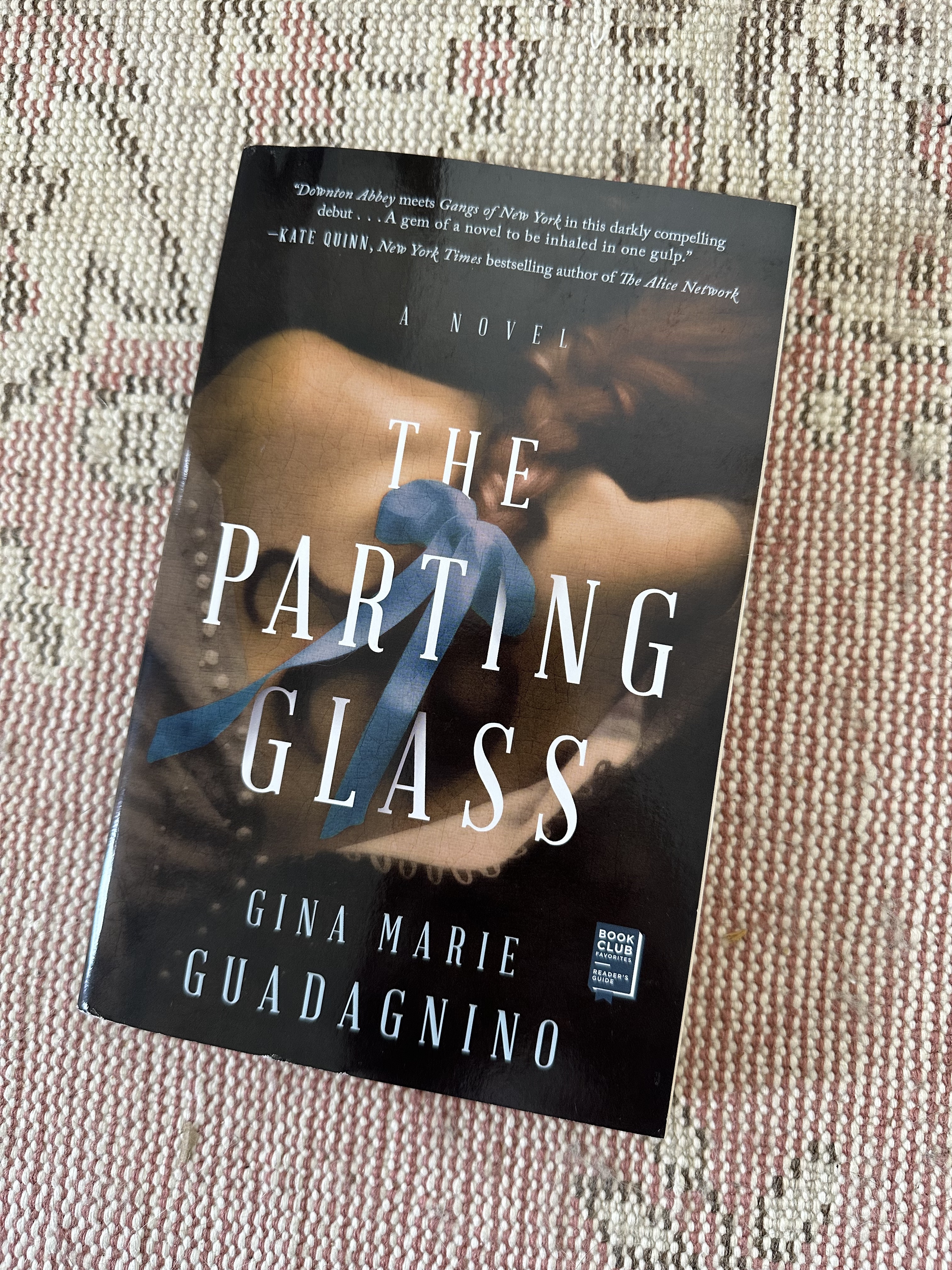
Neo-Victorian Voices: The Parting Glass, Gina Marie Guadagnino (2019)

Gina Marie Guadagnino’s 2019 The Parting Glass has many of the elements I love to see in books I review for my Neo-Victorian Voices series, on novels written in the twenty-first century but set in the nineteenth. Not only does the story take place in the 1830s, but the location is New York City, our heroine is Irish, and the subject matter is forbidden love (including several lesbian romances). 

Mary Ballard is lady’s maid to society beauty Charlotte Wharton, whom she’s secretly and passionately in love with. But she’s already lost one life for having a sexual relationship with a woman and, what’s more, Charlotte is having sex with Mary’s twin brother Johnny, even though she’s meant to remain a virgin until marriage.

Guadagnino does a great job painting a picture of the upstairs/downstairs world of the Wharton household, and also the very different world Mary and Johnny inhabit on their nights off, drinking at an Irish bar with publican Dermot, who knows their past and their real names. Another bright spot is the character of Liddie, a half-Black sex worker Mary meets and develops a relationship with over the course of the novel. 

There’s plenty of action, the stakes are high, and the novel reaches a dramatic climax, which delivers on the marketing promise that, in The Parting Glass, “Downton Abbey meets Gangs of New York.” 

What was less clear to me was whether Mary is a character we’re supposed to relate to and sympathize with. Her sexual obsession with Charlotte, while realistic, has incestuous overtones, which some readers may find off-putting. I actually wish Guadagnino had leaned into this even more at the start of the novel, but given Mary a character arc, as she came to a new, mature understanding of romantic love thanks to her reciprocal relationship with Liddie. Instead (slight spoiler here!), I left the novel feeling that Mary had treated Liddie pretty poorly and disappointed that she was still putting Charlotte and her style of upper-class, White beauty on a pedestal. 

Have you read The Parting Glass? I’d love to hear what you thought of the novel. Let me know—here, on Facebook, on Instagram, or by tweeting @SVictorianist.

Saturday, 25 February 2023

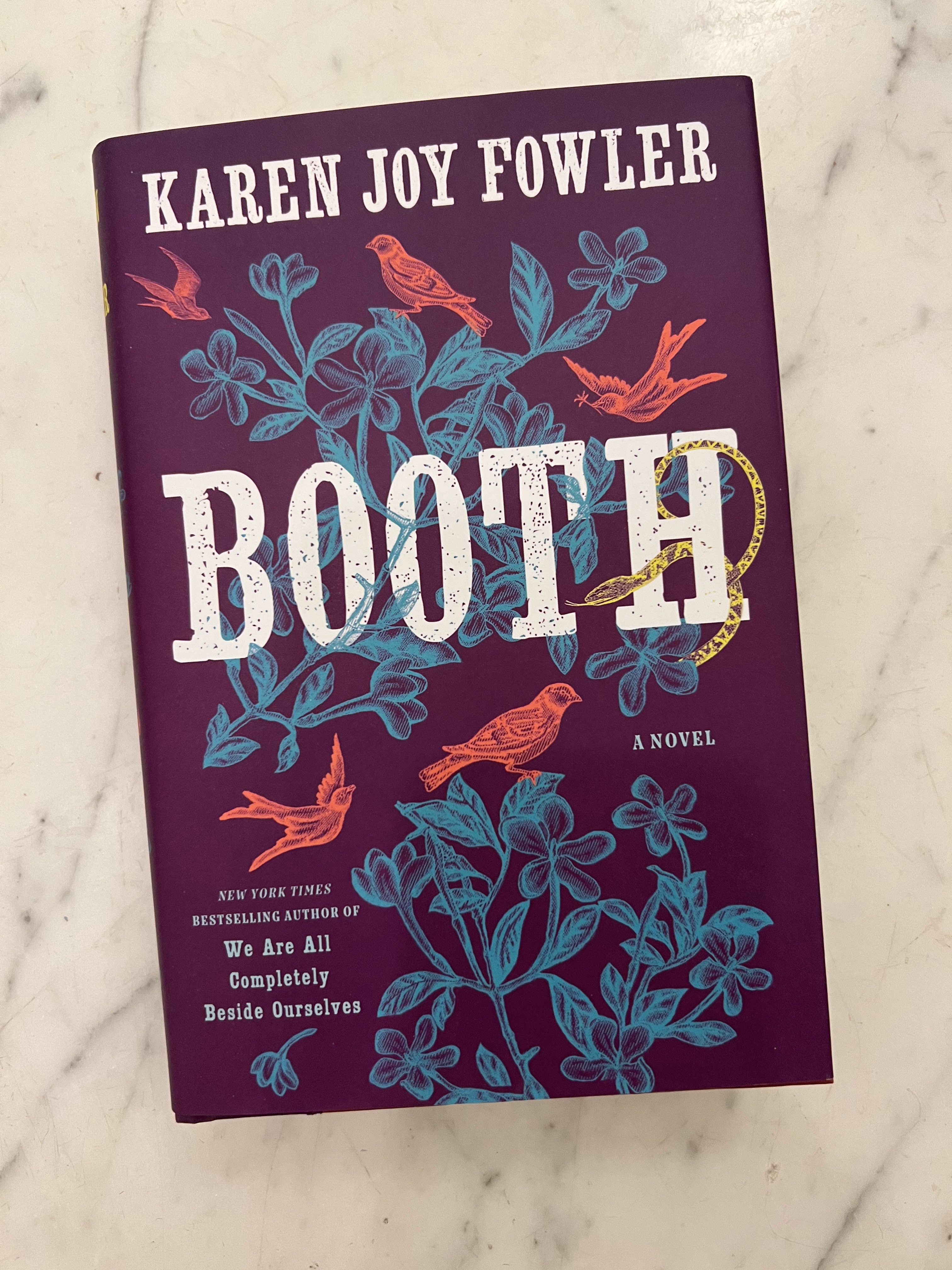
Neo-Victorian Voices: Booth, Karen Joy Fowler (2022)

I imagine that many American readers will come to Karen Joy Fowler’s 2022 novel, Booth, with preconceptions about John Wilkes Booth (1838-1865), the man who assassinated President Abraham Lincoln (1809-1865). However, having grown up outside the US, my knowledge of the killer and the theatrical family he was part of was essentially nonexistent before I sat down to read this latest book in my Neo-Victorian Voices series, about novels set in the nineteenth century but penned in the twenty-first.


Booth is one of those novels where we know what the climax will be—Lincoln will die. Suspense comes instead from anticipating the emotional and practical responses of the rest of the Booth family to John’s actions. We move between three of his nine siblings’ points of view in the novel, jumping from the mind of invalid and put-upon Rosalie to famous actor Edwin to beautiful and fiery Asia. This isn’t a book about a murderer—it’s a book about how a murderer’s actions affect those who love him most, so I was unsurprised to read in Fowler’s author’s note that she was partially inspired to write the book by considering the position of modern mass shooters’ families. 

The real-life Booths are wonderful fodder for a novel. In addition to John’s assassination of Lincoln, parental bigamy, alcoholism, daring and dangerous journeys across the United States, theatrical productions galore, and a stock of other juicy rumors were all at Fowler’s disposal when she sat down to write this book. If she’d made all this up some reviewers would have called Fowler’s novel farfetched but all the craziest details about the Booths are true, meaning, especially later in the book, there is, at times, too much incident. I would have liked some breathing room to give the characters even more page space to react and reflect.

Lovers of Shakespeare will enjoy how much Fowler makes of the importance of the bard to the Booth family culture and may also be intrigued by the altered versions of his famous plays most performed during the nineteenth-century. I also liked learning about other popular plays from the time period, and the history of costuming (the fact that actors owned their own expensive costumes for different roles was fascinating!). 

Coming back to the preconceived ideas readers may have about the Booths, Fowler handles the topic of slavery very deftly. Without lecturing, the novel explores how and why the siblings ended up with opposing ideas about abolition, and the divisions created by birth order, age gaps, and very different childhood experiences in a large family rang particularly true. This is the story of the Booth siblings, but secondary characters, including the family’s Black servants who are trying to buy the freedom of their children still trapped in slavery, give us an even broader perspective on the macro-forces at work in the country during this era. 

What novel would you like to see my review next as part of my Neo-Victorian Voices series? Let me know here, on Facebook, on Instagram, or by tweeting @SVictorianist. Like what you read? Sign up to my email newsletter for monthly updates on my writing and blogging. 

Wednesday, 28 December 2022

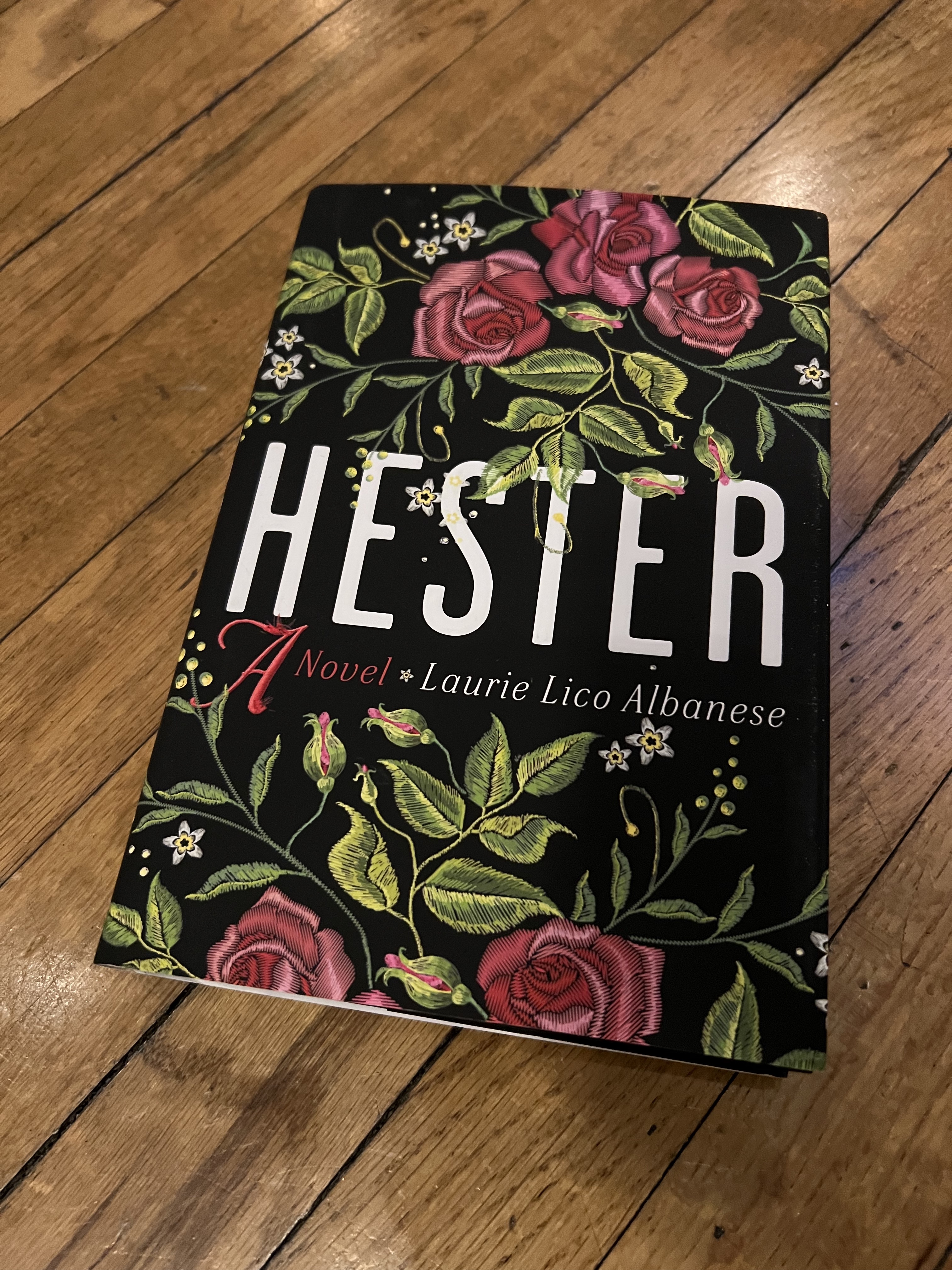
Neo-Victorian Voices: Hester, Laurie Lico Albanese (2022)

Welcome back to the Neo-Victorian Voices series, where I review books written in the twenty-first century, but set in the nineteenth. Today it’s the turn of Laurie Lico Albanese’s 2022 novel, Hester, which was inspired by one of the great American nineteenth-century novels—Nathaniel Hawthorne’s The Scarlet Letter (1850).

The title of the novel may be Hester, but our protagonist is the fictional Isobel, a young Scottish wife to an opium addict husband who immigrates to Salem, Massachusetts. There she encounters aspiring writer Nat Hathorne (who hasn’t yet altered the spelling of his name) and becomes a model for the character of Hester Prynne in his most famous novel.

Nat and Isobel’s emotional and romantic connection is at the core of the story, but the book isn’t just about Isobel as a muse—she is also an artist. A talented seamstress and embroider, just like Hester, Isobel has synesthesia. She sees letters in color, including, you guessed it, a scarlet “A,” but the condition isn’t one that’s talked about or understood. Isobel fears her ability may be magic passed down to her from an ancestor once accused of being a witch, a concern that dogs her when she learns the history of the 1692-1693 Salem witch trials, and the Hathorne family’s role in them. 

Familiarity with The Scarlet Letter is a plus, but not a prerequisite, for enjoying this historical novel, which errs on the side of realism over high drama. I most enjoyed the point of view of a character with synesthesia, the detailed descriptions of needlework, and the picture built up of nineteenth-century Salem. Short episodes detailing the exploits of Isobel's and Nat’s ancestors provided atmospheric background but didn’t add much to the overall plot. And the secrets harbored by Isobel’s Black neighbors were a little predictable, even though they were a welcome reminder of a broader historical context to the novel.

Overall, I’d recommend the book to lovers of nineteenth-century America settings and those who like their #histfic with just a hint of supernatural spice.

What novels would you like to see me review next as part of my Neo-Victorian Voices series? Let me know—here, on Facebook, on Instagram, or by tweeting @SVictorianist.