Showing posts with label Ireland. Show all posts

Monday, 31 August 2026

The Historical Novel Society Conference 2026: In Quotes

Last weekend I attended my sixth in-person Historical Novel Society Conference. Typically, the annual gathering alternates between American and British locations, but this year HNS UK went to Ireland. The setting? The historic university town of Maynooth outside Dublin. The attendees? A mix of historical novelists, of differing levels of professional experience, from around the world.

As usual, I’m summarizing the conference through some of my favorite quotes from the plenary and parallel sessions. Unfortunately, this year sessions were not recorded, but I still managed to catch a lot of talks.

Finola Austin reporting from HNS 2026!

“Curiosity may not kill the cat, but it certainly encourages me to explore rabbit holes,” Kevin Connolly

Research is always a hot topic at HNS conferences and Kevin Connolly gave us a great overview of the digital resources available to those writing historical novels with an Irish setting. 

“Correspondence will give you the social worlds of your characters,” Professor Terence Dooley

Meanwhile, Maynooth History Professor and conference keynote speaker Terence Dooley suggested letters and auction catalogues as two incredible primary sources for uncovering facts that could be stranger than fiction.

However, the question of how much research is necessary or helpful continues to be hotly debated.

“If you’re writing the truth, who cares about the facts?” John Banville

Keynote speaker John Banville encouraged us to prioritize emotional verisimilitude over pedantic research, while Carol Cram’s advice was similar:

“Don’t confuse accuracy with fidelity,” Carol Cram

We heard from writers who have different “rules” for themselves about sticking (or not sticking!) to the historical record, and, for many, these “rules” evolve between projects.

“The more novels I write, the more inclined I am to take liberties,” Martina Devlin

Anne Easter Smith reminded us that, when conducting independent research unattached to an academic institution, we may face obstacles.

“We are lowly novelists and historians will look at us like this,” Anne Easter Smith

And keynote speaker Vaseem Khan raised the point that some topics and perspectives have been expunged from the mainstream historical record:

“I use my books to talk about the history I didn’t learn about in school,” Vaseem Khan

Leslie Carroll cautioned us to consider the “who” behind each primary source we consult:

“I always weigh what I’m reading against who said it,” Leslie Carroll

And the question of point of view goes beyond research and into the writing process itself:

“Most stories have been written, so it’s about finding a fresh perspective,” Louise Fein

Finding a fresh perspective can help your book become more marketable, but speakers had other tips for helping your novel stand out from the slush or on the shelf.

Give your characters plenty of problems:

“Layer on obstacles to your ideas to strengthen your pitch,” Amanda Geard

Choose a progressive historical figure as your main character:

“Artists are people in society who like to push boundaries and break rules,” Laura Morelli

Or tap into themes that have continued relatability today:

“Sisters have universality. We have expectations of sisterhood,” Kate Braithwaite

I wish there had been more sessions digging deeply into writing craft, but Lenore Hart had some helpful advice for first chapters (before her Q&A got slightly derailed by a hot debate about writing and AI!). 

“Withholding information creates confusion, not mystery,” Lenore Hart

This was my favorite tidbit from her talk, as she advised early career writers not to delay giving readers crucial information, like who is this character and when and where are we they, in a misguided attempt to create intrigue. 

There were also only a couple of sessions digging into the business of publishing, including a keynote conversation between Essie Fox and her publisher, Karen Sullivan.  

“First novels contain seeds of everything we’ve read,” Essie Fox

I liked Essie’s idea about going back to your first novel to rediscover the passions that first brought you to writing. And Karen’s thoughts on not “chasing” market trends, as a historical novelist, were well-received by the writers in attendance:

“Trend-driven publishing is flawed,” Karen Sullivan

To round out this recap, I’ll turn back to John Banville, whose rejection of the idea that writing is a form of self-expression really stuck with me. His insistence that our novels are “no longer ours” when they’re out in the world resonated, especially in an environment where you don’t know whether to lead with what you’ve done or what you’re working on next.

“I can’t remember my own books. They’ve left me. They’re in the past,” John Banville

That’s a wrap for HNS 2026, but I’m looking forward to the North America conference in Pittsburgh in 2027! If we met at the conference, please stay in touch. If we didn’t, feel free to get in touch too. You can find me on Instagram, Facebook, or Twitter, and sign up for my monthly email newsletter here.

Friday, 31 July 2026

Neo-Victorian Voices: New Nineteenth-Century-Set Novels

My last few fiction reads have been set in the twentieth or twenty-first centuries, so today I’m doing something a little different as part of my Neo-Victorian Voices series: sharing a list of recently released and soon-to-be-released nineteenth-century-set novels I’m interested in reading. 

Hocus Pocus, Brinda Charry (expected August 2026)

India-born, US-based novelist Charry brings us a global nineteenth-century setting in her tale of an 1800s magician. I’m looking forward to seeing how she transports us to India, London, and Boston in 1816.

The Red Sacrament, Sara Hinkley (published July 2026)

A clan of vampires performing onstage in nineteenth-century Paris? I’m sold. And I hope Hinkley has brought her aesthetic sensibilities as a costume designer to her debut novel!

Land, Maggie O’Farrell (published June 2026)

Bestselling historical novelist O’Farrell turns to the period following the Irish Famine in her latest novel, which opens with a father and son mapping Ireland for the British.

Daughters of the Sun and Moon, Lisa See (published June 2026)

I very much enjoyed Lisa See’s 2005 Snow Flower and The Secret Fan, which I reviewed for this blog back in 2018, so I’m intrigued to read her tale of three Chinese women who arrive in Los Angeles in 1870.

The Foursome, Christina Baker Kline (published May 2026)

Kline draws from her own family history to tell the story of Sarah and Adelaide Yates, sisters in nineteenth-century North Carolina, who married Chang and Eng Bunker, conjoined twins from Siam.


 A Perfect Hand, Ayelet Waldman (published May 2026)

A lady’s maid tries to manipulate her employer into marriage to win her own happily ever after—this romantic romp sounds really fun!

Let me know if any of these novels are also on your TBR and what else I should add to my list. Want to keep up with my reviews of these novels and more? Sign up to my monthly email newsletter or stay in touch via Instagram, Facebook, or Twitter.


Tuesday, 21 November 2023

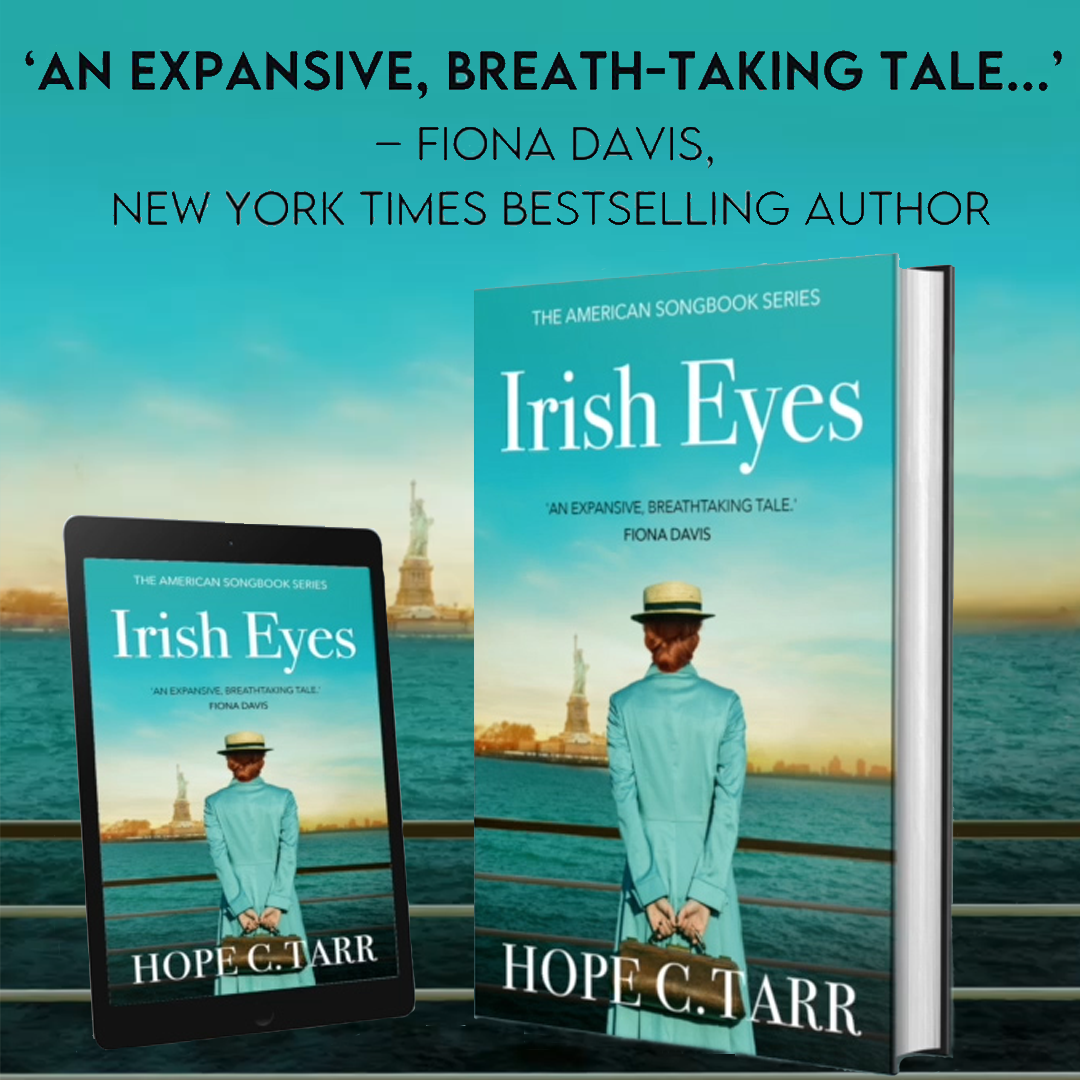
A Q&A with Hope C. Tarr, Author of Irish Eyes (2023)

Welcome back to the Secret Victorianst for a different sort of blog today—an interview with fellow historical novelist, Hope C. Tarr. You might remember Hope from the virtual panel event I did with Lady Jane’s Salon, the NYC-based romance readers’ club she co-founded, back in 2020. Next month, Hope’s debut historical novel Irish Eyes will be released by Lume Books, and I know readers of the Secret Victorianist are going to love it. Irish Eyes opens on the Aran Islands in 1898 and takes readers on a journey, with its heroine Rose, to the streets of late nineteenth/early twentieth-century New York City. I hope you enjoy my conversation with Hope and enter for a chance to win a copy of her novel below!

SV: How did you first get the idea for your novel, Irish Eyes?

Hope: Irish Eyes is very much a love note to my Irish ancestors, who came to America on the coffin ships at the height of the Great Hunger. For years, I batted around the idea of writing something with an Irish heroine. Finally, on a hiking trip to Western Ireland in (gulp) 2008, I stopped at the famed Cliffs of Moher and gazed across Galway Bay to the trio of islands known as the Arans, and Rose O'Neill’s story began taking shape in my mind. Back in Manhattan, running along the Hudson River, looking out to Ellis Island and Lady Liberty helped further flesh out Rose’s story.

SV: How did the book evolve from your first to your final draft?

Hope: Whoever first said that “writing is in the rewriting” was wise indeed. Irish Eyes changed so many times. Originally, I had a prologue, in fact two prologues, which I really loved. The first prologue began with Rose in 1922 at mass narrating her life story to the parish priest. The second prologue started with Adam, Rose's future love interest, at the Battle of San Juan Heights during the Spanish-American War. I've actually shared that prologue on my History With Hope Substack! To pick up the pacing and start in the thick of the story, both of these very different prologues ended up on the chopping block. A la Stephen King, sometimes you really do have to murder your darlings. 😉

But by far the biggest shift in molding the story was also the scariest. At the onset, I'd written the entire book in my trusty go-to perspective: third-person. But something was missing. The story wasn't... gelling. As a reader, I'd always adored novels written in the first-person—du Maurier’s Rebecca, anyone? —but I'd never had the courage to try first-person POV myself. Once I did and rewrote the entire book in Rose's voice, it all began coming together.

SV: How did writing historical fiction differ from the genres you've written in in the past?

Hope: After wonderful years spent writing 20+ romances for Penguin, Harlequin, and Macmillan, I was ready for a BIG change. Ready to push the boundaries of genre and do a deep dive into history, in this case, mostly early twentieth-century history. Ready to write the sort of big, sweeping historical novel that I'd grown up devouring. Books like Diana Gabaldon's Outlander series, technically romance, where you get to spend time with the characters, who evolve over not days/weeks/months but years. In other words, a saga. For a while now, “saga” has been something of a dirty word in American publishing. For that reason, I suspected I was going to have a tough time selling this book, especially as it would be my historical fiction debut, which probably explains why it took me so long to finish it and then shape it into a shoppable manuscript. That being said, if I had to sum up the experience of writing Irish Eyes and bringing it to this point, that word would be “freeing.”

SV: Do you have any tips for writers of historical fiction who are trying to make their books relatable to modern readers without being anachronistic?

Hope: Admittedly, this can be a tough balance to strike, especially when keeping in mind younger readers, who approach fiction with a very different set of expectations than I did at that age. With Irish Eyes, as with any historical fiction, I try to step back and ask myself, “how critical is this point/word/phrase to telling a great story?” If the answer is “not so much,” I may leave it out rather than veer into anachronism. But I also think it's important to understand how we've collectively evolved over the eras. And not evolved. So many of the issues addressed in Irish Eyes—immigration, the roles and rights of women, labor reform, income inequality—are eerily reflective of our present moment. History is cyclical, not linear. It's important to bear in mind that we are making "history" every waking moment.

SV: Your novel, while it's one woman's story, touches on major world and local events, e.g., WWI and the Triangle Shirtwaist Factory fire. What was your process like for naturally weaving these references into the novel?

Hope: The biggest challenge in writing Irish Eyes was to decide what historical events not to include. (Back to murdering those darlings!). The book covers 24 years in Rose's life. While the 24/7 news cycle is a recent phenomenon, newspapers were a big, busy feature of turn-of-the-century life. In writing the novel, I put in, and later took out, several events that, while interesting, wouldn't have directly impacted the immigrant community of my fictional heroine and her growing family. For example, the assassination of President McKinley (September 14, 1901) gets a brief mention while the Triangle Shirtwaist Factory Fire of March 25, 1911, in Lower Manhattan, gets a half-chapter.

SV: You're a New Yorker yourself. How did this help your process in writing the book?

Hope: Living here as I've been privileged to do, the city's history is all around, waiting to reveal its stories to those open to knowing them. I was here in 2011 for the centennial commemoration of the Triangle Shirtwaist Factory Fire at the Brown Building (formerly the Asch Building) where the factory was housed in 1911. The long-anticipated memorial was dedicated in October 2023. The adjacent Washington Square Park began as a potter's field when a series of yellow fever outbreaks starting in 1797 caused the city morgues to overflow. Human remains still rest beneath the elegant fountain and curated plantings. McSorley's Old Alehouse, NYC's oldest continuously operating bar (1854-present), which I recently revisited for another History With Hope episode, serves the same cheddar cheese and onion platters it did back when the great illusionist Houdini stopped in for a post-performance pint.

SV: What historical novels have you read and loved recently?

Hope: I'm very keen on World War II at the moment, likely because I'm working on the sequel to Irish Eyes, set in occupied Paris. I recently finished, and loved, Good Night From Paris, by Jane Healey, a fictional account of the real-life Hollywood screen actress, Drue Leyton, who was living in Paris with her French husband when the Second World War broke out. Rather than return home to the States, Drue accepted a position broadcasting from Paris to the (then neutral) US. Under the Nazi occupation, she repeatedly risked her life working for the Resistance.

SV: What should we look forward to seeing later in the American Songbook Series?

Hope: As I cagily slipped in above, I'm at work on a sequel, Stardust! The second book in my American Songbook series, Stardust follows Rose's granddaughter, Daisy, into the late 1930s and 1940s. Fashioned in the image of her indomitable Irish grandmother, Daisy will take the reins of Rose's Kavanaugh's Department Store when the time comes. In preparation, Rose sends Daisy to Paris to apprentice with the iconic couturier and fragrance entrepreneur, Coco Chanel. In shadowing the mercurial Chanel, Daisy is thrown into the thick of a glittering and treacherous cast of characters—American and British expats, the Parisian haute-monde, war correspondents, and German spies—all of whom congregate at the Hotel Ritz. While she's there, the Nazis invade and occupy Paris. Like the world-famous Chanel No. 5, a blend of 80 secret ingredients, no one in occupied Paris is what they at first seem. 😉

Hope C. Tarr

SV: Thank you so much for speaking with me, Hope, and for giving me the chance to read Irish Eyes ahead of publication. 

Hope: Thank you so much for having me! I hope readers will enjoy Irish Eyes as much as I loved writing it.

Would you like to win a signed paperback copy of Hope C. Tarr’s Irish Eyes, alongside a signed paperback of my own historical novel, Bronte’s Mistress? If so, sign up to my monthly email newsletter here. Anyone who subscribes to the newsletter between 21st November 2023 and 7th December 2023 (the Irish Eyes release day!) will be entered into a random draw to win both books. Already signed up? Spread the word to friends and family who might want to win and stay in touch with me via Facebook, Instagram, and Twitter.

Tuesday, 8 August 2023

Thomas Hardy’s “How She Went to Ireland”: An Analysis

I’m being a poor Victorianist today and straying outside the nineteenth century to analyze one of Thomas Hardy’s lesser-known poems, “How She Went to Ireland,” which was written in response to the death of writer Dora Sigerson Shorter in 1918. 

While Hardy is now remembered best for his great nineteenth-century novels (think: Tess of the d’Urbevilles (1891) and Jude, the Obscure (1895)), he ended his career as a thoroughly modern poet. His verse often touches on the loss of religious faith as a harbinger to an emotionally challenging new century, while his language has a simplicity which can be hard to reconcile with the wordy descriptions we associate with Victorian prose.

Bringing you another poetry analysis!


“How She Went to Ireland” reads as follows:


Dora’s gone to Ireland

Through the sleet and snow;

Promptly she has gone there

In a ship, although

Why she’s gone to Ireland

Dora does not know.


That was where, yea, Ireland,

Dora wished to be:

When she felt, in lone times,

Shoots of misery,

Often there, in Ireland

Dora wished to be.


Hence she’s gone to Ireland,

Since she meant to go,

Through the drift and darkness

Onward laboring, though

That she’s gone to Ireland

Dora does not know.


One of the first things we notice about the poem is its fairy-tale or fabulistic quality, which is in keeping with Dora Sigerson Shorter’s own writing (she was also a poet and one fascinated by Gaelic myth and culture). Contributing to this are the poem’s frequent repetitions (“Ireland”—four times, “Dora”—five times, “gone”/”go”—six times) and the subtle variation in sentence structure that draws our attention and demands analysis. “Why she’s gone to Ireland/Dora does not know” in the first stanza is replaced by “That she’s gone to Ireland/Dora does not know,” confirming for the reader that Dora is dead, not just confused about the motive for her journey.

Similarly, the Ireland of the first stanza seems like a tangible place, reachable by ship and plagued by realistic weather conditions. But, from the second stanza, the Ireland written about here takes on a mythic quality. Dora, a proud Irish nationalist, “wished to be” in the Ireland that she’s now gone to, meaning the name of the country now seems to refer to an afterlife—albeit one that, in a post-faith world, the dead, like Dora, can have no consciousness of. 

A few other details are worth paying attention to. The phrase “shoots of misery” in the second stanza conjures up the violence of Ireland’s recent past (this poem was written only two years after the 1916 Easter Rising), as well as the imagery of budding plants (“shoots”) and physical sensation (the shooting pain we may feel in our nerves).

Hardy is also pointed in his use of line breaks. The words “though” and “although” are separated from the clauses they are grammatically part of, introducing a pervasive doubt reminiscent of Hardy’s better-known poems, like “The Darkling Thrush” (1900). The sing-song rhyme scheme (ABCBAB) and childlike language of “How She Went to Ireland” may lull us into a false sense that the story we’re being told is simple, but the poem is ultimately unsettling. Death is now merely “drift[ing]” through “darkness,” since we lack the guiding light of religious belief to light our way.  

What to do you make of this short but interesting Hardy poem? I’d love to hear from you. Let me know—here, on Facebook, on Instagram, or by tweeting @SVictorianist. Want to get monthly updates from my blog? Sign up to my email newsletter here.

Wednesday, 3 May 2023

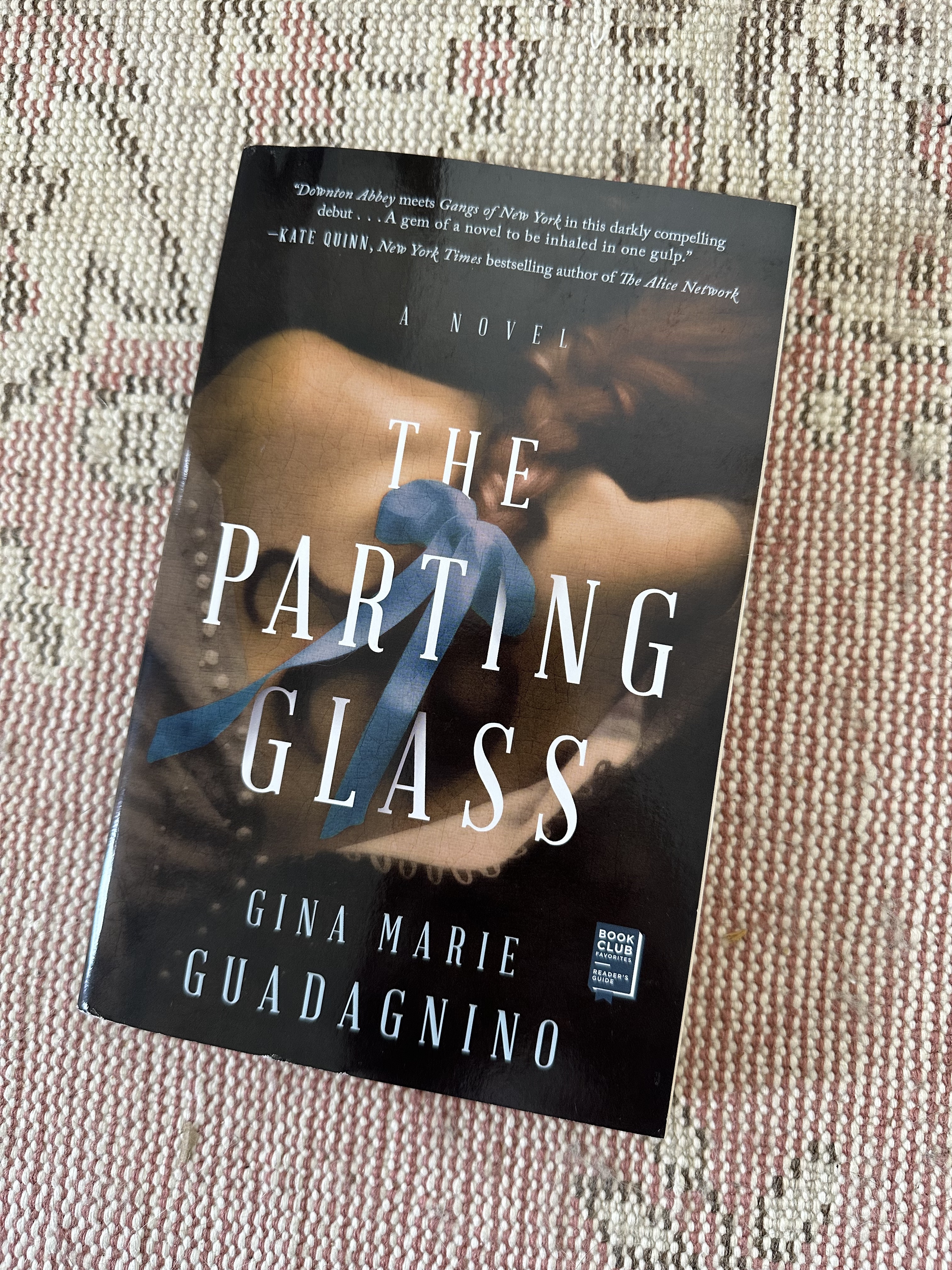
Neo-Victorian Voices: The Parting Glass, Gina Marie Guadagnino (2019)

Gina Marie Guadagnino’s 2019 The Parting Glass has many of the elements I love to see in books I review for my Neo-Victorian Voices series, on novels written in the twenty-first century but set in the nineteenth. Not only does the story take place in the 1830s, but the location is New York City, our heroine is Irish, and the subject matter is forbidden love (including several lesbian romances). 

Mary Ballard is lady’s maid to society beauty Charlotte Wharton, whom she’s secretly and passionately in love with. But she’s already lost one life for having a sexual relationship with a woman and, what’s more, Charlotte is having sex with Mary’s twin brother Johnny, even though she’s meant to remain a virgin until marriage.

Guadagnino does a great job painting a picture of the upstairs/downstairs world of the Wharton household, and also the very different world Mary and Johnny inhabit on their nights off, drinking at an Irish bar with publican Dermot, who knows their past and their real names. Another bright spot is the character of Liddie, a half-Black sex worker Mary meets and develops a relationship with over the course of the novel. 

There’s plenty of action, the stakes are high, and the novel reaches a dramatic climax, which delivers on the marketing promise that, in The Parting Glass, “Downton Abbey meets Gangs of New York.” 

What was less clear to me was whether Mary is a character we’re supposed to relate to and sympathize with. Her sexual obsession with Charlotte, while realistic, has incestuous overtones, which some readers may find off-putting. I actually wish Guadagnino had leaned into this even more at the start of the novel, but given Mary a character arc, as she came to a new, mature understanding of romantic love thanks to her reciprocal relationship with Liddie. Instead (slight spoiler here!), I left the novel feeling that Mary had treated Liddie pretty poorly and disappointed that she was still putting Charlotte and her style of upper-class, White beauty on a pedestal. 

Have you read The Parting Glass? I’d love to hear what you thought of the novel. Let me know—here, on Facebook, on Instagram, or by tweeting @SVictorianist.

Thursday, 20 April 2023

Film Review: The Wonder (2022)

Back in 2018, I reviewed Emma Donoghue’s 2016 nineteenth-century-Ireland-set novel, The Wonder, for this blog—check out my full review here. Today, five years on, I’m back with a post about the book’s film adaptation.

The Wonder (2022) is remarkably true to Donoghue’s novel and doesn’t resort to Hollywood theatrics to enhance the story. It stars Florence Pugh as the English nurse, Lib, and she’s the ideal actor to pull off the role. Despite the slight plot and limited setting, Pugh’s facial expressions alone are enough to keep our interest for nearly two hours. The filmmakers also do a great job conveying the moody atmosphere, which makes the genre of the movie initially difficult to pin down. Are we in a horror film or is this psychological horror? movie watchers might ask themselves in the first thirty minutes.

One result of the faithful adaptation is that my original criticisms of the novel still hold. The romantic subplot is underdeveloped, and Lib never sways in her rational beliefs, although I would have loved to see Pugh grappling with whether to accept a supernatural explanation for her patient’s lack of appetite. The movie also introduces a new problem—a slightly bizarre and meta frame story, that reminds us that we are watching actors, not real people. This was a strange choice, but these short opening and closing minutes do little to detract from what is an entertaining watch.

Overall, I’d recommend The Wonder to fans of costume dramas and Pugh, and anyone with an interest in nineteenth-century Ireland. I loved how the film emphasized the trauma of the Great Famine, placing a disturbing story about one child who refuses to eat in a wider cultural and historical context. Writers may also wish to compare the novel to the screenplay to understand how small changes can play to different media.

What nineteenth-century film would you like the Secret Victorianist to review next? Let me know—here, on Facebook, on Instagram, or by tweeting @SVictorianist

Saturday, 17 October 2020

September Articles by Finola Austin, Author of Bronte’s Mistress

For the last few months, thanks to the release of my first novel, Bronte’s Mistress, I’ve been cheating on my Secret Victorianist blog by writing articles for other bigger (though less cool 😉) publications. 

August was wild with nine personal essays going live in Oprah Magazine, LitHub, Women Writers, Women[‘s] Books, Frolic, Historia Mag, Off the Shelf, Bronte Blog, English Historical Fiction Writers and Silver Petticoat Review. By contrast, September was much calmer, but I’m really proud of the four essays I had published and excited to (re-)share them with you today!

First up, I wrote about the real love affair that inspired my novel for both the Irish Times and Town and Country magazine. 

In Town and Country, I talked about my attempt to “capture something of the passion of Charlotte, the social commentary of Anne and the darkness of Emily, in shedding light on this scandalous true story,” and highlighted the things that the Bronte siblings and I do and don’t have in common. 

In the Irish Times, I mentioned the Brontes’ Irish and Cornish roots and shared my excitement at finding, “another chapter of this saga…the history of Lydia Robinson, the older woman blamed for their brother Branwell’s early demise.”

The Brontes were also my subject for a piece for Refinery29, which had a pretty different focus. I talked about the afterlife the Bronte sisters have enjoyed as our archetype for the successful woman writer—poor, plain and virginal—and argued that women need more varied models for dedicating their lives to art. 

Finally, I wrote a more technical piece for Almost An Author, on what fellow writers should consider when writing fiction in the first person. Charlotte Bronte’s line “Reader, I married him” may be one of the most famous in English literature, but what does it mean to adopt the “I” of a fictional character? And what are the traps writers can fall into here?

I hope you enjoy these pieces and my other essays from earlier in the year. If you’ve already read and enjoyed Bronte’s Mistress, please consider leaving a review on Goodreads or Amazon. And, if your book club wants to read my book, I’d absolutely love to join your meeting via Zoom. Download the Bronte’s Mistress reading group guide here and contact me via my website. Alternatively, get in touch via Facebook or Instagram or by tweeting @SVictorianist.  

Get updates on my novel - Bronte's Mistress

* indicates required


Monday, 8 July 2019

Neo-Victorian Voices: The Lighthouse Keeper’s Daughter, Hazel Gaynor (2018)


There’s a lot to love about Hazel Gaynor’s The Lighthouse Keeper’s Daughter, a multigenerational saga interweaving dual historical narratives—one set in 1838, the other in 1938.

The Lighthouse Keeper's Daughter
The story of Grace Darling, a real Victorian lighthouse keeper’s daughter (1815-1842), who took part in a daring sea rescue off the Northumberland coast, is wonderful material for fiction. And Gaynor augments her tale deftly with additional plots inspired by women lighthouse keepers in Ireland and Rhode Island.

The characters at the novel’s heart—the pregnant, unmarried Matilda, the widowed Sarah, the bereft Harriet and Grace herself—share a capacity for courage, a deep relationship with the sea, and a penchant for attracting tragedy. It’s fun to guess from the novel’s early pages what it is that binds them together, to puzzle out their family trees and look for connections in an inherited book, locket or portrait.

Gaynor writes action particularly well and bookends her novel with it, capturing the sea’s ferocity as well as its beauty in the novel’s opening and later scenes. She also writes believable dialogue, which suggests place and period with the lightest of touches, rather than, for example, overdoing Irish dialect or ’30s slang.

Hazel Gaynor
As with many dual narrative historical novels, the cyclical nature of time is a theme here, with words, ideas and actions echoing through the generations. While the variations in plot kept me guessing, the repetition on a language level sometimes grated—characters are forever soothing each other, for instance, and everyone seems to collect seashells. At times I also wondered if Grace and Matilda felt distinct enough for having been born one hundred years apart. They have the costumes of different periods and speak with appropriate metaphors, but I didn’t feel the difference between their mid-nineteenth- and mid-twentieth-century world views.

Overall, I’d recommend The Lighthouse Keeper’s Daughter as a great summer read, especially if you’re going to be by the water. As with Amy Brill's The Movement of Stars, the last novel I reviewed as part of this Neo-Victorian Voices series, this read offers an insight into the women who worked during the nineteenth century and pursued passions we might think of as only being explored by men.

Do you have any recommendations of novels the Secret Victorianist should read next as part of my Neo-Victorian Voices series? Let me know—here, on Facebook, or by tweeting @SVictorianist.

Sunday, 26 August 2018

Neo-Victorian Voices: The Wonder, Emma Donoghue (2016)

Many will know Irish-Canadian novelist Emma Donoghue from her much-lauded Room (2010)—the contemporary tale of a woman trapped by a predator and bringing up her son in captivity. But Donoghue’s works when viewed as an oeuvre otherwise have a decidedly historical bent. There’s Slammerkin (2000), inspired by an eighteenth-century murder, The Sealed Letter (2008), the story of an 1864 divorce case and Frog Music (2014), the tale of a nineteenth-century cross-dressing frog catcher. And then there’s her 2016 The Wonder, which I’m writing about today—a novel set in the 1850s that pits the English rationality of a nurse trained under Florence Nightingale against a village of superstitious Irish peasants, convinced they have a miracle in their midst.

The Wonder (2016)

Eleven-year-old Anna O’Donnell hasn’t eaten in months, or so her parents claim. Is God sustaining the child with manna? Or is this a hoax, a medical oddity, something more sinister? Lib Wright, our protagonist, is determined to be vigilant and to get to the bottom of the mystery, but she doesn’t expect to grow fond of her devout and unworldly patient, or that she will have to confront her past—the secrets she is hiding of her own.

Donoghue’s cast of characters is small and her setting a tiny village, with one store-cum-drinking place, surrounded by bog. I was unsure how the simple premise would play out over the length of a novel but she’s masterful at building tension and at suggesting the monotony and repetitions of a nurse’s ‘watch’ or ‘vigil’, while keeping readers turning the pages.

Emma Donoghue (1969-)

The Ireland of the mid-nineteenth century leaps off the page, but, most unsettling, it’s not unthinkable to imagine a similar story unfolding in the country’s rural communities today. There’s much that’s recognisable—the pervasiveness of religion, which mingles with folklore and myth, the hostility towards outsiders, the culture of secrecy, suffering and martyrdom.

Much as I enjoyed the novel, there were two slight disappointments. First, the love interest character—a journalist—is under-developed, convenient for plotting purposes but lacking the nuance of Lib, Anna and others. Second, nothing really forces Lib to reassess her prejudices about the zealots she’s surrounded by. It wasn’t that I was hoping for a supernatural explanation but I would have liked a moment of self-revelation, where Lib rethought some of her assumptions.

Overall The Wonder is a quiet sort of historical novel, with drama and action saved for the final pages. It’s a novel about caregivers and patients, cynics and believers, and, more than anything, our complex relationship with food, our bodies, appetite. Donoghue has a gift for uncovering tales from the past, which have resonance today.

Which twenty-first century novel, set in the nineteenth, would you like the Secret Victorianist to review next as part of my Neo-Victorian Voices series? Let me know—here, on Facebook or by tweeting @SVictorianist.

Sunday, 3 May 2015

Neo-Victorian Voices: The Convictions of John Delahunt: A Story of Murder, Andrew Hughes (2013)

In today’s post I’m considering whether Neo-Victorian writing is simply a sub-genre of historical fiction through blogging about Irish writer Andrew Hughes’s debut novel, published in 2013, The Convictions of John Delahunt: A Story of Murder.

The pure definition of ‘historical fiction’ is a novel, or other work, where ‘the plot takes place in a setting located in the past’. Reading this, the texts I’ve looked at previously as part of my Neo-Victorian Voices series – Michael Cox’s The Meaning of Night and John Harding’s Florence and Giles – and Hughes’s novel definitely all fall into this genre.

The Convictions of John Delahunt: A Story of Murder (2013)
However, it is very noticeable that, in the case of the Cox and Harding, other important elements, which we’ve come to expect from historical fiction (at all levels of quality), are missing. First, there is the inclusion (or here exclusion) of actual historical figures. A key tenant of historical writing has been to offer a new perspective on famous historical events, or to educate the reader about events and/or people whose stories have previously been ignored. While The Meaning of Night uses the conceit of a newly discovered manuscript (labelled ‘Fiction?’), none of its events or characters have basis in truth. The novel is an escapist fantasy, and it fits self-consciously into the traditions of Victorian literary sensationism. Florence and Giles is even more indebted to a literary (rather than an historical) inheritance, as it is a reworking of a Henry James plot. There are no ‘real’ characters here – only layer upon layer of fiction and artistic response.

Hughes’s project, however, is very different. John Delahunt was a real person, hanged for the murder of Thomas Maguire (a real child) in Dublin in 1841. Hughes’s project is far removed from Cox’s or Harding’s – it’s about composing a compelling narrative from the details we know of Delahunt’s life, combined with his own imaginative embellishments. What’s more, it is presumed (correctly!) that the reader’s first response on finishing the novel will be to want to learn more about the text’s veracity – an Afterward supplies the answers we may have wondered about throughout and also adds the information (for example about the execution) which Delahunt (the narrator) cannot, in some ways acting not as a note on the text, but as the novel’s final chapter.

Along with the insertion of real people, historical fiction is also often rich in detail about the times in which it is set. Of the three novels, again The Convictions fits into this mould most comfortably. Having worked as an archivist and previously published a book on nineteenth-century Dubliners (Lives Less Ordinary: Dulin’s Fitzwilliam Square, 1798-1922), Hughes has a lot of knowledge of the period to draw upon. He does this very skilfully, with a light touch, suggesting the political milieu of the time without turning what is a suspenseful crime novel into a political history, and weaving details of forgotten ways of living seamlessly into the plot. One of the most effective passages is the partial description of a backstreet abortion, yet Delahunt’s wife’s struggles with the termination and contraception don’t just add colour – they’re integral to the story.

Andrew Hughes (1979 - )
Some details were occasionally overwhelming (although they may well be welcome to readers with a better grasp than me of Dublin’s geography!) and the inclusion of other ‘real’ characters from the period (e.g. Professor Lloyd and Dr Moore), as outlined in the Afterward, seems more like an in-joke for the author than of substantive benefit to the text. But largely, Hughes does a wonderful job of propelling us into the city as it stood in the 1840s and informing us about its society, without ever coming off as didactic.

While Florence and Giles is almost totally free from this kind of factual peppering, the level of detail in The Meaning of Night was also extraordinary, but occasionally more gratuitous than it comes off in The Convictions. For me, the distinction comes from whether there is a need to introduce a detail. (Does it advance the plot? Does it explain a character’s motivation?). Without a reason behind each detail, it risks changing the tenure of the novel, making it into some sort of immersive time travel, rather than a narrative entertainment.

So where does this leave our categorisation and definition of Neo-Victorianism? Some of the concerns of the movement I’ve discussed in previous posts (e.g. the prioritisation of previously repressed voices and the self-aware revisitation of standard Victorian literary tropes from a modern perspective) suggest something more is going on here than a spate of historical novels set in the Victorian period. If we take Neo-Victorianism as combining nineteenth-century setting with twenty-first century sensibilities and preoccupations, there is very much a space for The Convictions in this category. Hughes’s first novel is ‘historical’, but, in its very modern interrogations of personhood, morality, sexual relationships, power, and corruption, it has a strong claim to ‘Neo-Victorianism’ too.

Which novel should the Secret Victorianist read next as part of her Neo-Victorian Voices series? Let me know – here, on Facebook or by tweeting @SVictorianist!

Friday, 6 December 2013

Review: In a Glass Darkly, Sheridan Le Fanu (1897)

This collection of short stories from Irish writer Sheridan Le Fanu varies in length, narration and style. They deal with vampires in Styria, legal malpractice in London, a strange man stalking his victim through the streets of Dublin. What unites them all is play with the supernatural and uncanny. Initial scepticism and a trust in the ‘scientific’ is increasingly unsettled and undermined as Le Fanu leaves us with no clear answers. These are ‘ghost’ stories which linger both in their telling and in their effect. Don’t expect horror movie shocks and twists. But draw up to the fireside this December to be more disturbed than entertained.

Sheridan Le Fanu
For general readers: In a Glass Darkly is an uneven experience and its strange narrative structure, as a series of loosely connected stories collected by a shadowy doctor (Dr Hesselius), may be off-putting to readers used to more traditional Victorian novels, but there is much here to interest a non-academic audience. The scepticism about the supernatural which pervades the novel, almost in spite of its content, is readily recognisable to modern reader, while the connection between the conscience or subconscious and the onset of hallucination and mania which the stories often suggest is one which is easily recognisable, even if this means the stories lose something of their ground-breaking edge. ‘Carmilla’ will probably have the widest popular appeal, dealing as it does with a form of vampirism with overtly erotic lesbian overtones. It’s the kind of story which confounds common misconceptions about the ‘Victorian’. The other longer story, ‘The Room at the Dragon Volant’, has similar character interest, especially given its hero’s actions are far from morally uncomplicated.


For students: As well as being an interesting read, ‘Carmilla’ will also be of interest to students of the Gothic and Bram Stoker in particular, predating as it does Dracula (1897), for which it provided some inspiration. Those interested in the impact of Swedenborgism on literature should turn to ‘Green Tea’, the first story in the volume, where the apparition of a phantom monkey also suggests interesting Darwinian contexts. And comparison with Charles Dickens’s short stories could also work, both in terms of structure (see my earlier discussion of MrsLirriper) and in some cases content – the judgement undergone by Justice Harbottle here makes the ghostly apparition which appear to Scrooge in A Christmas Carol seem almost cuddly.

What should the Secret Victorianist read next? Let me know here, on Facebook or by tweeting @SVictorianist!